

The house you can only book by letter
18 July 2026 · Written by Lulu Townsend · Travel & Lifestyle
Who else religiously wrote thank-you letters when they were younger? To Godparents, aunts, uncles, friends? Parents made us sit down and write a thank-you letter as soon as we opened a present!
But I haven’t written a proper letter in years. Cards, yes. Thank you notes. The occasional furious complaint, typed, because anger always looks better in Times New Roman, even if you delete it before sending. But a letter, handwritten, sealed, sent to a post office box on a volcanic island and answered in kind? Not since I was a girl.
El Elevador has made me really want to, though I am worried my handwriting is so illegible (through lack of practice!) that they wouldn’t be able to read what I write..
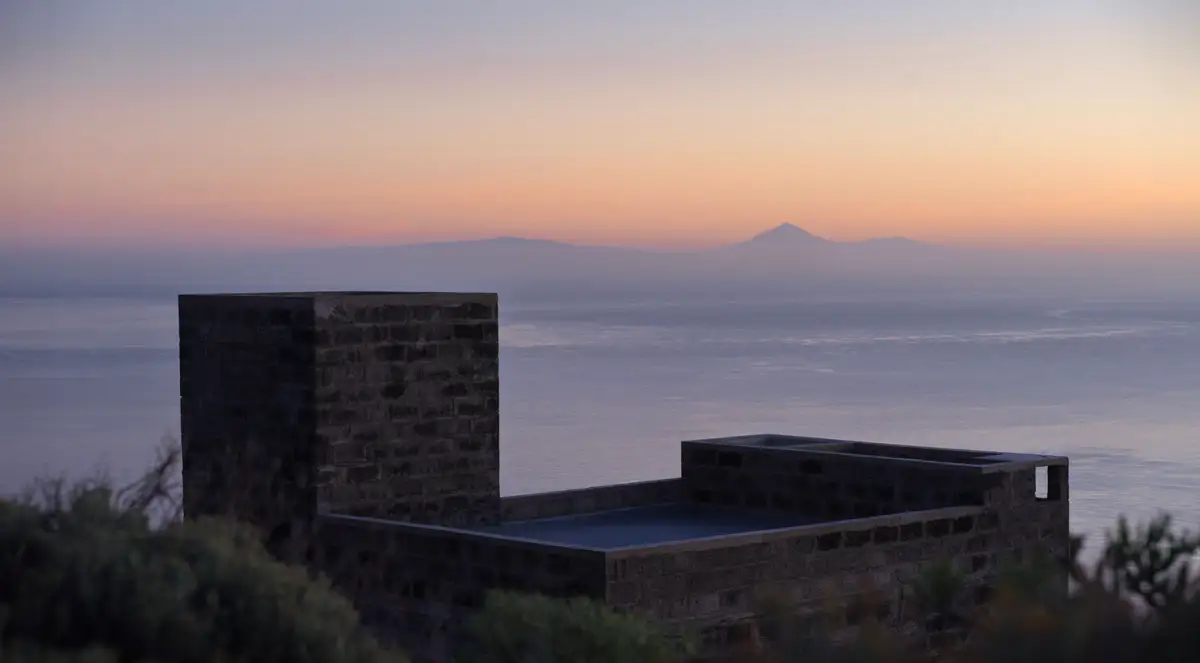
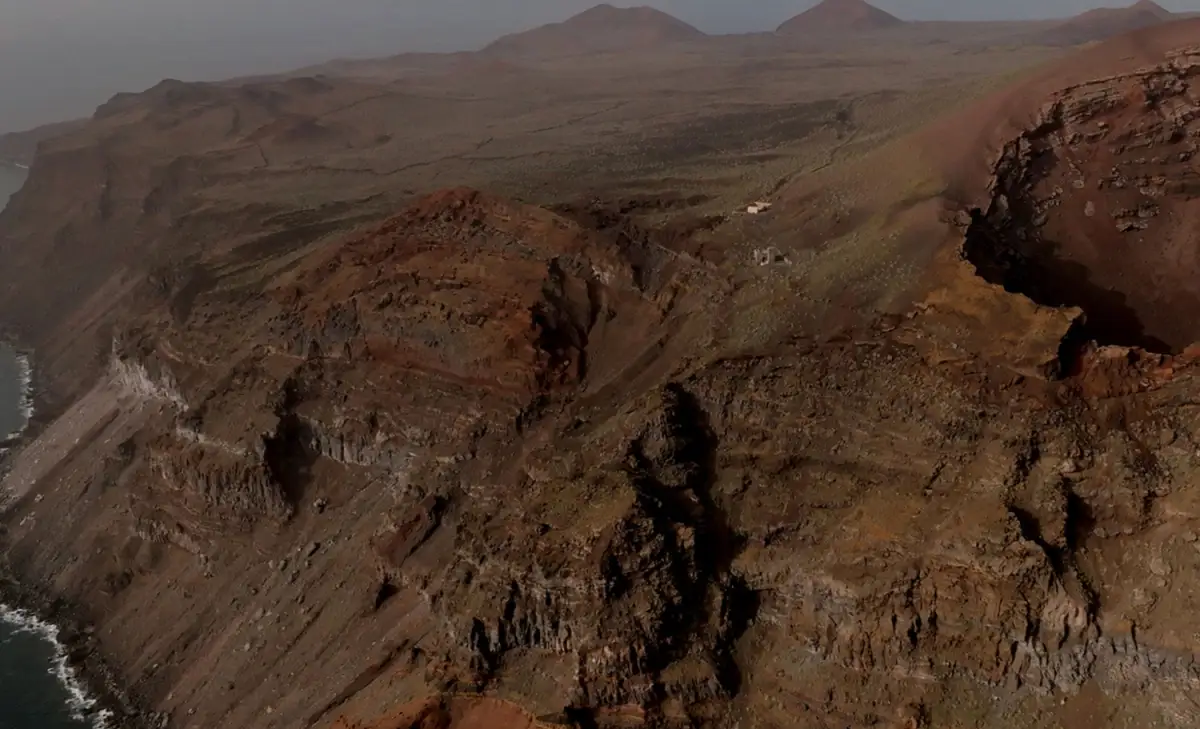
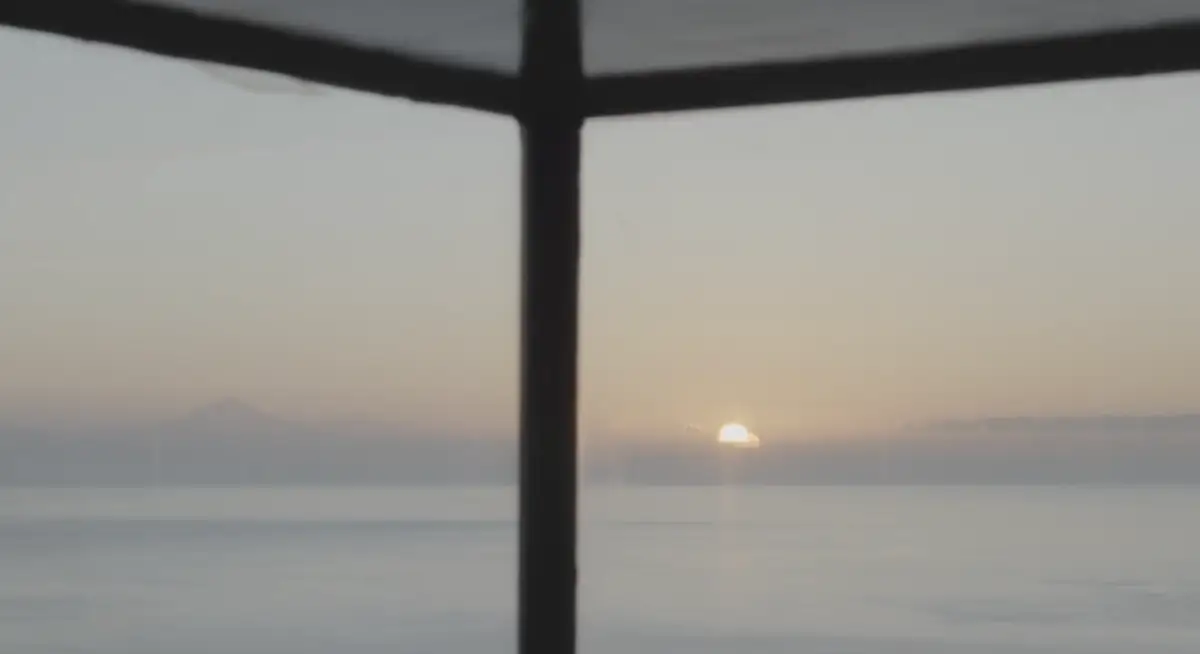
It sits on the island of El Hierro, the westernmost of the Canaries and the farthest from the mainland. Fewer than 22,000 international tourists a year, against sixteen million for the archipelago as a whole. No real beaches or trendy hip hotels. Until Columbus sailed past, this was the end of the known world, and it still behaves and looks as if it were. The house stands alone at the top of a lava cliff, 250 metres above the Atlantic, a small grey cube of rough concrete that, depending on your mood, looks like a war bunker or a minimalist chapel. It sleeps two. There is no WiFi, no phone signal, no television. It’s a totally off-grid retreat, ready to tempy anyone who’s happy to be out of their comfort zone (comfort zone is a lovely place, but nothing ever grows there).
And you cannot book it online. To stay, you write a letter by hand and post it to Valverde. You explain what draws you there and what you hope to find. Then you wait. No confirmation email, no ping, nothing. Weeks later, assuming your letter arrives and is read with interest, a handwritten reply arrives with a private link to choose your dates. That link is the only digital moment in the whole exchange.
Pretentious? Possibly. But it works as a filter, and its honesty appeals to me. The house asks for the same attention it plans to give back to you during your stay.
The owners are playing a literary game. Their two-word description of the place is rough magic. That is Prospero at the end of The Tempest, renouncing his powers on his island. You may find a page left in the house typewriter carrying Caliban's speech, the one that begins, be not afeard, the isle is full of noises. An island of cliffs and strange sounds, hard to reach, where you give up your devices at the door. Somebody there has read their Shakespeare properly.
The man who raised the water
The building was never meant to be beautiful. In the 1960s a flour mill owner named Juan Casañas set about solving the problem that had been emptying his island for generations. El Hierro kept losing its people to drought, whole families sailing for Cuba and Venezuela because the land could not hold water. There was a freshwater spring at sea level, below the cliffs, reachable only by boat. Casañas designed and largely hand-built a system of pipes inside the rock to pump that water up the cliff and into the fishing village of La Restinga. The little concrete house held the machinery.
By 2021 it was a ruin. Alberto del Hoyo and Silvia Rodríguez, the Tenerife couple behind BeTenerife, found it and understood what they were looking at. They brought in the Canarian architect Alejandro Beautell, a man best known for poured concrete churches, and asked him to turn a pumping station into a place to stay. Elevar means to raise.
Austerity, expensively done
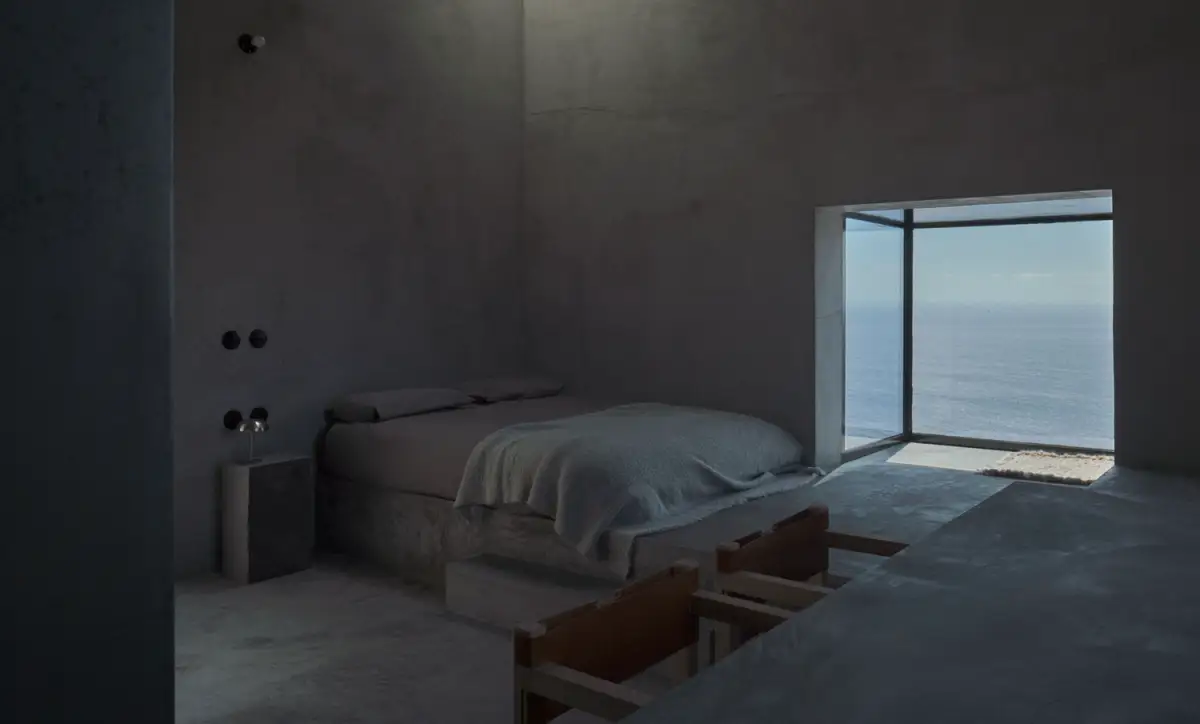
Inside, the space is a single room of about sixty square metres, unadorned concrete on every surface, levels stepping up and down like the workings it replaced. A glass box juts from one wall over the void, somewhere to sit and watch the ocean do nothing at great length. The old transformer tower is now a bathroom, six metres tall, glass-roofed, the shower a single pipe pouring from high on the wall.
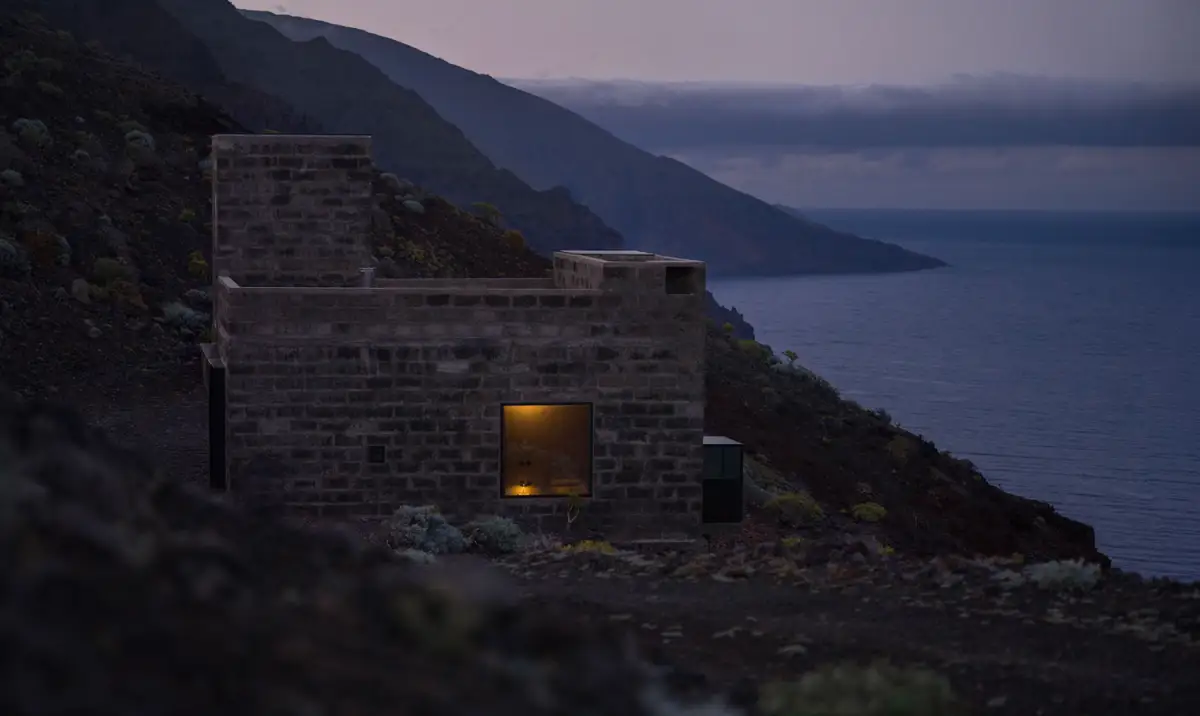
The photographs coming out of it are something else. A shaft of daylight drops through a square opening in the roof and crosses the plaster like a sundial. The shower, a rope of water out of the dark. The one I love was taken at dusk from across the valley: black hillside, black ocean, and one small building with its windows lit amber, the only light for miles.
This restraint does not come cheap. The sheets are Bassols. The pans are Mauviel. The wine glasses are Josephinenhütte, handblown and priced accordingly. The fridge arrives stocked with island cheeses, pastries and wines from grape varieties you have never heard of, Vijariego and Baboso Blanco, grown in tiny plots behind drystone walls. And in a cupboard, for guests who feel the pull, a working 1930s Remington typewriter and a vintage Hasselblad loaded with a roll of Ilford film with just 12 frames, so you have to think before you press the shutter.
The Financial Times sent a writer to stay shortly after it opened, and he came back half converted, wondering whether the burnt-out and the over-connected might be exactly who this house is for. I suspect he is right, though I would add another category: anyone bored rigid by hotels that are all decorated in the same colour, all speak the same language of infinity pools and welcome amenities, using the same awful language such as beverage, high-end and upscale.
Who should write
Not everyone should. There’s nothing here for children, for dogs, or for anyone who gets twitchy without a signal, and the cliff edge rules out vertigo entirely. It’s a house for one or two people willing to spend a few days alone with a book and their own company, undiluted. Around it, El Hierro offers wind-twisted pine forests, lookouts above a sea of cloud, black lava tidal pools clear enough for snorkelling, and an eight-seat tasting counter in Valverde where chef Marcos Tavío cooks from the island's pre-Hispanic food culture.
The address is simple. El Elevador, Apartado de Correos 14, 38900 Villa de Valverde, El Hierro. I am still deciding what my letter will say. Something true, short, written slowly, in ink. The isle is full of noise. Apparently, you have to post a letter to hear them.