

What Luxury Travellers Actually Want Right Now (And It's Not What Hotels Are Selling)
22 June 2026 · Written by Lulu Townsend · Travel & Lifestyle
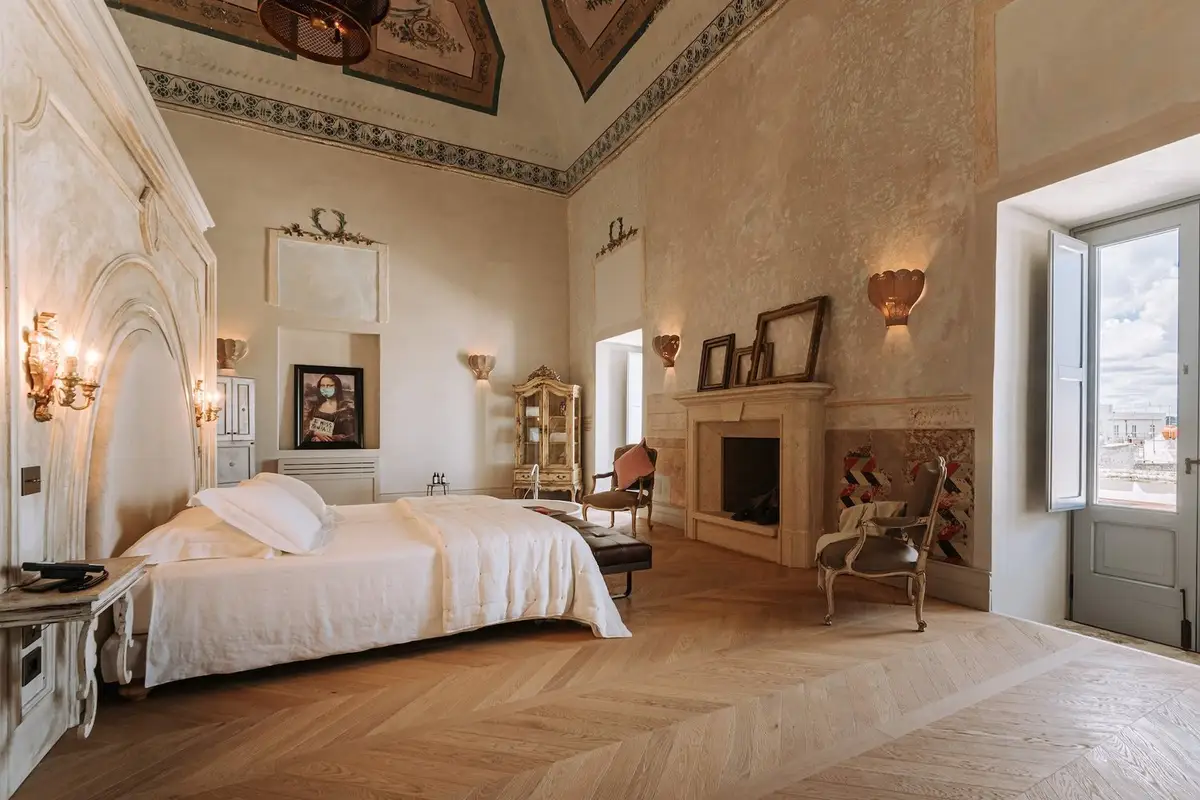
Something has shifted in luxury travel, and it isn't subtle. Prices are higher than ever. Bookings are happening later than ever. And the most affluent travellers in the world, the ones who could go anywhere, are starting to say no.
Not to travel. To the version of luxury that stopped listening.
Embark Beyond, one of the most respected ultra-high-net-worth travel companies in the world, has just published its Q1 and Q2 2026 trends report, and it makes for compelling reading. I've been working in luxury hospitality marketing for over twenty years, and some of what they've found confirms what I've been seeing with my own clients. Some of it surprised me. All of it matters if you work in, write about, or simply love this industry.
Here is what luxury travellers actually want right now.
They Want to Feel Something Real, Not Just See Something Beautiful
The report introduces what Embark calls the Connection Economy, and it's the most important idea in the entire document. We've spent years talking about "experiential travel" and "transformational journeys." Embark's argument is that we've been one layer too shallow. What people are really buying, beneath any experience, is connection, to other people, to themselves, to something that feels genuinely meaningful.
Loneliness is identified as the defining post-pandemic epidemic. The World Health Organisation now considers social disconnection a major global public health priority. Private members' clubs are proliferating. Self-organised group travel among people who aren't related to each other is up 450% since 2020 at Embark. Celebration travel, birthdays, anniversaries, engagements, bat mitzvahs in the south of France, has grown 341% in the same period.
The practical implication for hotels is stark. A beautiful room is a baseline. No one needs another beautiful room. What people are paying extraordinary sums for is the feeling of being welcomed, recognised, and looked after, the original Aman and Ritz-Carlton promise of being a guest in someone's home. That has never been more valuable, and it has never been harder to manufacture with a new booking system or a redesigned lobby.
They're Questioning Value, Loudly
One of the bluntest sections in the report deals with value, and it doesn't spare the industry. Embark's closure rate, the proportion of quotes that convert to bookings, has been falling steadily, from 81% in 2023 to a projected 73% in 2026. Price resistance is the primary cause.
This isn't about people spending less. Average transaction values are still rising, sitting at just over $31,000 in 2026. But travellers have become far more precise about what they feel is worth it. When rates increased without any corresponding improvement in service or experience, even the wealthiest clients started feeling, in Embark's words, "stupid."
The value calculation has also expanded well beyond the hotel room. Clients are now weighing the entire journey: how chaotic is the airport, how good is the flight, how crowded will the streets be when they arrive. Capri and St Barths are both cited as destinations approaching a tipping point, not because the hotels are failing, but because the experience outside the hotel has become so difficult to enjoy that the overall proposition feels compromised.
For boutique hotels in quieter, more manageable destinations, this is genuinely good news. The crowds and chaos that plague the most famous addresses are becoming a reason to look elsewhere.
They're Moving Away from the Mediterranean in Peak Season
Europe remains the dominant luxury travel market, 46% of Embark's total revenue in 2026, up from 40% in 2025. France and Italy continue to lead. But the peak summer months are softening, particularly in August, and the reasons are instructive.
Long-haul flights in business and first class are up 30 to 50% in cost due to fuel prices. Mediterranean hotels are already expensive. Restaurants in the south of France regularly charge over €1,000 per couple. And the heat and overcrowding are now frequently cited as reasons not to go. July 2026, for the first time in Embark's history, is tracking below the same month in 2025.
What's growing instead: shoulder season. May, June, and September are each up 20 to 38%. European cities are busy well into January in a way that simply didn't happen five years ago. The report attributes this partly to climate change and partly to travellers actively seeking to avoid the crush.
Specific destinations showing strong growth include Lake Como (up 93% on pace), the Dolomites (up 119%), Venice (up 94%), and the Côte d'Azur, which is tracking over 300% growth for 2026. Scotland, Scandinavia, and Ireland, all cool, all quieter, all dramatically less crowded, are up more than 25% over the past two years.
For anyone marketing a property in a non-obvious European destination, or one that genuinely shines in spring or autumn, the moment is now.
They're Looking for Wellness That Goes Skin-Deep
The wellness conversation has moved on. What began with weight-loss drugs (GLP-1s, still growing in influence) has evolved into something the report describes as optimisation. The focus is no longer on how long or how well you live, but on how good you look and feel while doing it.
Peptides, injectable and topical compounds that signal the body to repair, rebuild, and perform better, are the new buzzword. Skincare and medical aesthetics are driving travel to Seoul and Japan in particular, both cited as major growth destinations for what the report calls "beauty tourism." Destination spa vacations were up 26% in 2025, and the shift is away from pampering and toward clinical, results-driven programmes.
Men's skincare is part of this too. A CNBC and Mintel study cited in the report found that male use of skincare products jumped 68% between 2022 and 2024.
For wellness retreats and spa hotels, the opportunity is in moving the conversation away from relaxation, which has become generic, toward tangible results. The guest who books a peptide facial or a clinical recovery programme is looking for something to show for it.
They Want Passions, Not Places
This is the one that has the most implications for how hotels market themselves. Embark reports that passion-driven travel is up 126% over the past three years. The finding is that most affluent travellers under 50 have already been everywhere. The Colosseum, Machu Picchu, the Louvre, these are checked boxes. What they haven't done is go somewhere to pursue a specific obsession in depth.
Mushroom foraging trips. Mahjong weekends. Painting retreats in the hills above an Italian town. Fitness boot camps. Watches of Wonder in Geneva. Art studio access around Frieze. These are not niche requests, they are the mainstream of how high-end travellers are choosing to spend their time and money.
The destination, in this model, is a platform. The question a hotel should be asking isn't "what can guests do here?" but "what specific community of people can we bring together around a shared interest, and where do we fit in that story?"
They're Travelling with Their Pets
Requests for pet-friendly travel are up 62% at Embark. The report frames this with some context: birth rates in many first-world countries have fallen dramatically, and pets have moved firmly into the centre of family life. The comparison made is to the growth of children's travel post-9/11, a market that transformed the industry. Embark believes pet travel is at the same early stage
.What this means practically: pet-friendly airlines, pet concierge services, resort programmes specifically designed around animals, and assistance navigating international pet travel paperwork. Hotels that have genuinely thought this through, rather than simply allowing pets in rooms, are going to be well ahead.
They're Barely Drinking
This one is quietly significant. A 2025 Gallup poll found that only 54% of Americans said they consumed alcohol in the past year, the lowest figure since polling began after Prohibition ended. Embark reports that alcohol consumption at their events is down 38%. Wine destination travel, Napa Valley, Provence, is down 31% and 22% respectively.
Younger couples are actively seeking alcohol-free destinations. The report notes this is shifting perceptions of places like Saudi Arabia's Red Sea resorts, previously a hard sell for Western travellers who assumed the alcohol-free environment would be a deterrent.
For hotels and restaurants, this is an invitation to invest seriously in non-alcoholic beverage programmes, not as an afterthought, but as a genuine point of differentiation.
What This Means
The through-line across all of this is surprisingly simple. Luxury travellers in 2026 want to feel that someone has genuinely thought about them, their passions, their companions, their pets, their preferences around drinking or not drinking, their desire to be in a place that isn't unbearably crowded in August.
They don’t want to pay a great deal of money to feel like part of a transaction.
The hotels, retreats, and destinations winning right now are the ones that have understood this not as a marketing proposition but as an operating principle. The ones struggling are the ones who raised their prices and assumed that was enough.
It isn't. It never really was.
Sources: Embark Beyond Q1 and Q2 2026 Trends Report. Lulu Townsend is a luxury hospitality copywriter and marketing consultant at Lulu's Luxury Lifestyle.