

The History of Ulpotha; the best yoga retreat in the world
10 November 2025 · Written by Lulu Townsend · Travel & Lifestyle
The History and Legend
A living landscape
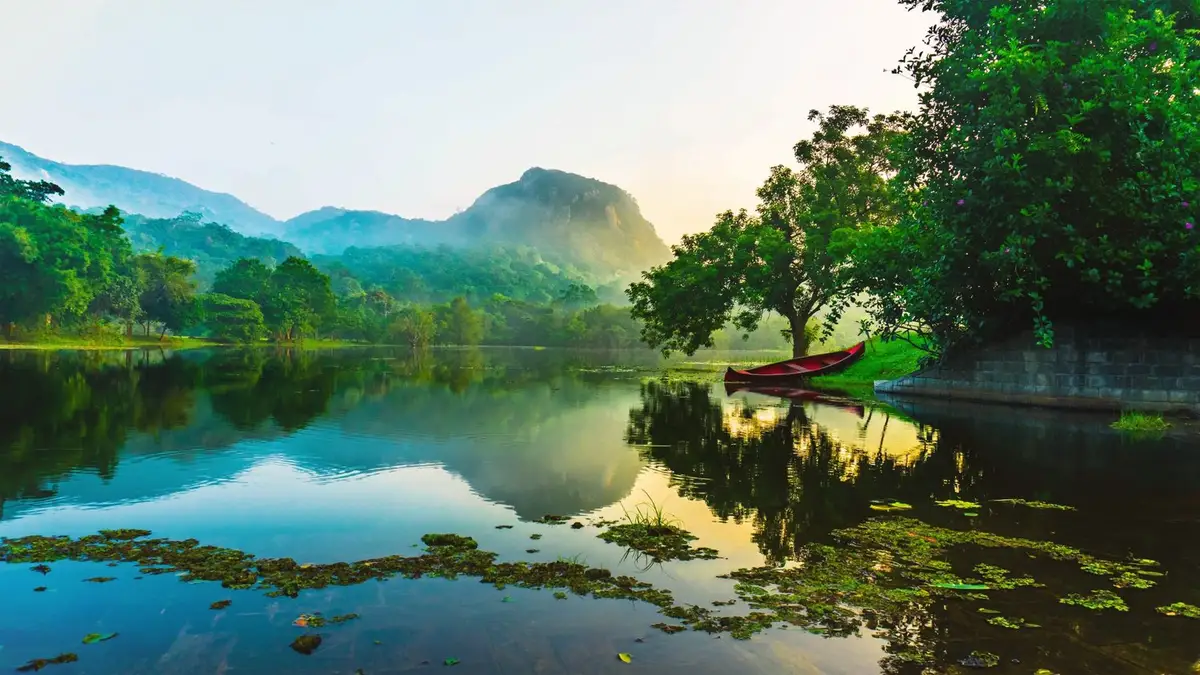
Ulpotha sits in one of the oldest continuously inhabited regions of Sri Lanka. Its story stretches back over 5,000 years and is carried in the soil, the water and the hills that surround the village.
A sacred place
Local tradition tells of mendicants who travelled from the Himalayan foothills in search of a site linked to Lord Kataragama, an aspect of the god-child Murugan and son of Shiva. They recognised Ulpotha as that place because its seven hills matched descriptions in ancient lore. After the head priest received a vision showing a special devotional ritual, a temple was raised at the village entrance to honour their tantric deity.
A royal love story
The mountain above Ulpotha is said to have sheltered Prince Saliya, son of the famed King Dutugemunu, more than two millennia ago. He chose love over the throne, marrying Asokamala, celebrated in epic tradition for her beauty. Legend says they left the royal city of Anuradhapura through a hidden tunnel and made their life here.
Land of chieftains
What we now call Ulpotha once formed the ancestral lands of regional chieftains who oversaw twenty-nine villages. They carried the sacred duty of tending the Kataragama temple and upholding the rituals and traditions of the indigenous Wanni culture.
The manor house
At the heart of Ulpotha stands a small manor house, restored with care. Local lore places it at the crossing of two elephant paths, an auspicious site marked by a grove of untouched jak saplings that even elephants would normally favour.
Enduring spirit
The surrounding hills still accommodate cave-dwelling ascetics and practising shamans. Ulpotha’s foundations rest on nature, history, tradition and myth. Many feel the land’s quiet power, shaped by the stories of gods, kings, priests and a love that chose a different path.
A New Beginning at Ulpotha
Why We Do What We Do
People often talk about caring for the natural world and bringing more spirit into modern life. It sounds good. It rarely feels practical.
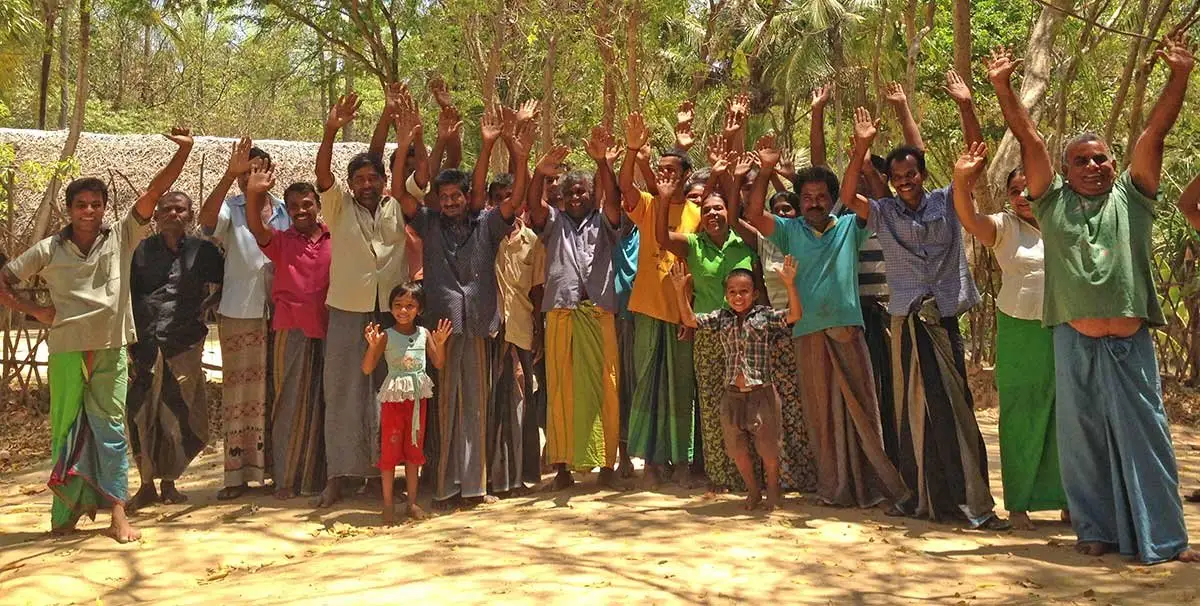
When Ulpotha, abandoned for decades, crossed the path of three friends, it sparked something simple and idealistic. Trees were planted. Ancient irrigation was revived. The land was farmed organically. Traditional wattle and daub homes were built by hand. Ulpotha was brought gently back to life for the love of it, not for profit.
Our focus has always been restoration in practice. A traditional agricultural lifestyle. Biodiverse organic farming. Reforestation and patient care of the land. There is no grand long-term plan. If there is an aim, it is to live unhurriedly, in harmony with nature and with our neighbours.
Opening for part of the year lets others share what is here and helps generate the funds needed to keep Ulpotha flourishing. It stays simple. It stays real. Tune in, switch off, and feel what a slower way of living can do.
The Lifestyle at Ulpotha
Our Way of Life
Ulpotha is, above all, an experience of relaxed, contented living. Work and play both have their place. So does proper rest. When these are held in balance, life feels well lived.
Rhythm, not rush
Traditional ways of living made space for what matters: close ties with family and community, a daily relationship with nature, simple spiritual practice, and work that felt like a way of life rather than labour. There was time to play, and time to be still.
A cyclical view
Here we follow a cyclical rhythm rather than a constant push for “more.” Seasons turn; energy rises and softens; the good and the hard both come and go. At the centre is a steady point of harmony you can feel, whatever the moment brings.
Living tradition
Across ancient cultures, “tradition” meant an intuitive knowing of deeper truths, not just inherited habits. In Ulpotha, that quiet knowing seems present in the land itself. It makes a traditional lifestyle feel natural, unhurried, attentive and rooted.
How it feels
Many describe a simple, unmistakable peace here. It’s not forced. It arrives as you tune in and switch off: walking to the shala at first light, eating food grown nearby, resting when the heat asks for it, working with your hands when it’s time. Life arranges itself, and you feel part of it.
The Farming
From Aridity to Abundance
When Ulpotha was re-inhabited, the land was tired from years as a monoculture coconut estate. The first task was water. We reshaped planting patterns and built small ponds and bunds to hold rain, slow run-off and protect the soil’s fertility.
Soil, Water, Shade
Fast-growing timber and fruit trees went in to cast shade and, in time, provide income. Beds were planted with vegetables and now-rare, nutrient-rich heritage rice. Sri Lanka once grew over four hundred varieties; today, only a handful of hybrids are common. Reviving older strains is part of our work.
Natural Care, Traditional Wisdom
We protect crops using traditional timing and biological means. Planting happens at auspicious moments, and vows are made to the spirits of the land. When needed, we turn to natural remedies, including powdered neem seed, dried makra leaves, crushed coconut, jak sap, cactus milk, kadura branches, bamboo leaves, and riverbed sand. Simple, local, effective.
Working with Buffalo
Ploughing and threshing are done with buffalo. Tractors break the paddy’s sealing crust and force heavier irrigation; they churn up less fertile soils and bring noise and fumes. Buffalo avoid all that, offering quiet strength, natural fertiliser and nourishing milk. And, of course, they give life to the next generation.
A Living, Self-Sustaining Farm
Today Ulpotha is a biodiverse, organic farm where practice and respect go hand in hand: care for soil and water, gratitude for harvests, and honour for the deities said to watch over this place. It’s holistic farming in the truest sense, grounded, cyclical and in rhythm with the land.
The Water at Ulpotha
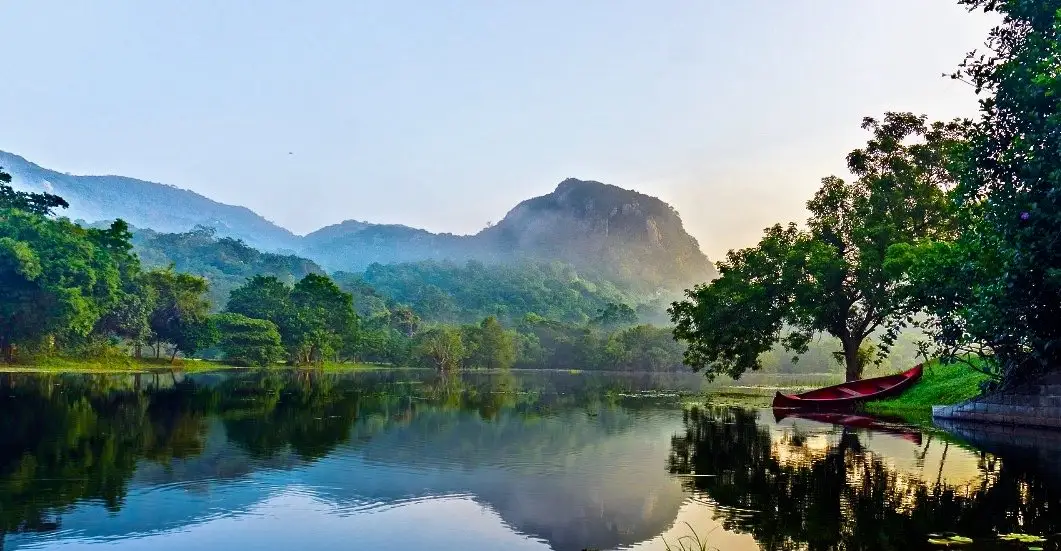
The ‘tank’ at Ulpotha
Water: Heart of Ulpotha
Water is Sri Lanka’s oldest treasure. Ulpotha means “water spring,” a name given for the underground springs that run through the land. From the beginning we have cared for water first. Fields were reshaped, small ponds and bunds were built, and the old ways of holding rain and protecting soil were brought back.
The village tank tradition
Ulpotha sits within a network of village tanks that work as one system. A typical layout includes a mountain tank for chena cultivation, a forest tank for wildlife, an erosion and silt tank to trap soil, and a main storage tank that feeds the irrigation channels.
For thousands of years these tanks were built and kept in good order through Rajakariya, or service to the common good. Every villager gave time each year to care for water and land.
What went wrong
In the 1980s outside interventions altered the balance. Bunds were breached to link separate tanks. The main bund was raised. A concrete weir and sluice were installed. The system silted up, began to leak and lost capacity. Water tables fell. Farmers went from two harvests to one.
Community repair, step by step
We agreed a simple plan with our neighbours. Ulpotha would fund materials. Village farmers would give their labour.
-
1997: Rebuilt the erosion and silt control tank.
-
1998: Strengthened the main bund and de-silted the main tank.
-
2002: Modified and rebuilt the weir and clad it in granite.
-
2004: Broadened the main bund, raised the weir by 18 inches, and restored the bund between the forest and main tanks.
-
2007: Fully rebuilt the leaking sluice.
These works restored storage, reduced silt and brought the system back into balance.
What’s next
We plan to restore the “sky tank” in the hills above. Once repaired, it will feed the springs more evenly and strengthen the whole chain of tanks below.
Why it matters
Looking after water ties together farming, wildlife and village life. It is practical and it is local. When people care for water with respect, the land responds.