

The Art of Slow Luxury: A Quiet Cigar Ritual at Home
27 May 2026 · Written by Lulu Townsend · Travel & Lifestyle
I first came to cigars not through bravado, but through stillness. It was on a small rooftop in Marrakech, the call to prayer settling over the Medina like dust, a friend pressing something quietly into my hand. There was no ceremony, no men in leather chairs and no cloud of pomp. Just the slow unfurling of an evening, the deepening blue of a Moroccan sky, and the realisation that, every now and again, the most refined thing in the world is to do less.
For someone who writes about slow luxury, about boutique hotels with linen-soft mornings and the discipline of doing fewer things beautifully, the cigar has quietly become a kind of compass. It asks for time. It refuses to be rushed. And in a culture that confuses speed with quality, that seems to me an act of small, lovely rebellion.
The quiet appeal of a well-made cigar
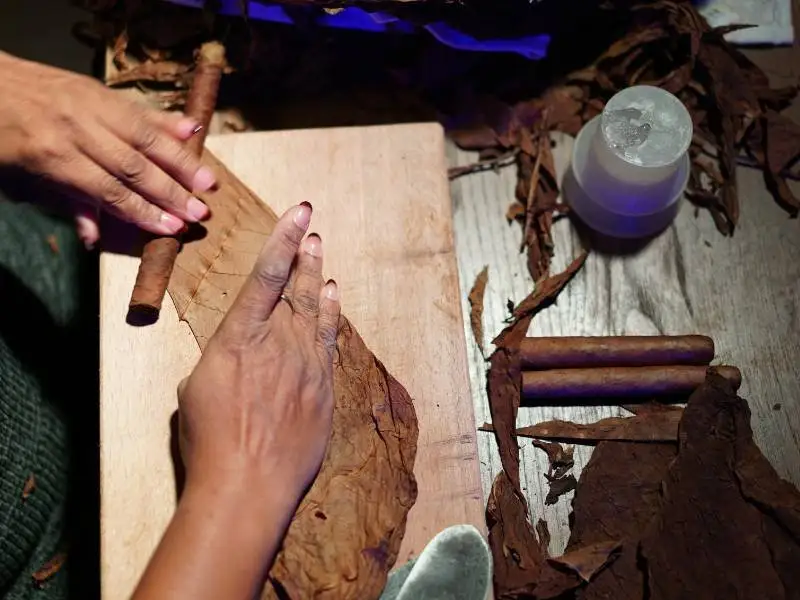
A well-made cigar is a small piece of devotion. The tobacco has been grown patiently, often in the red Cuban earth of Vuelta Abajo or in the gentle hills of the Dominican Republic, then fermented for months, sometimes years, by people who measure their craft in decades rather than quarters. Each leaf is rolled by hand. There is no shortcut. The very thing you are holding has, in some sense, been refusing to hurry for a very long time.
That is what makes the great names, with the iconic range of Cohiba cigars chief among them, feel less like products and more like artefacts. Cohiba was, after all, born as a private pleasure before it ever became a brand: a single roller, a single tobacco blend, a single discerning audience. It is a story that still flatters anyone holding one, and I find that rather charming.
Setting the scene
The ritual, for me, has very little to do with the cigar itself and everything to do with the world around it. I prefer a terrace if I can find one: a Cotswold garden in early summer, a Tuscan stone balcony with the cicadas just beginning, a wrought-iron table on a riad rooftop. Failing that, an open window, a deep chair and a lamp left low.
The objects matter. A simple cutter rather than a clumsy one. A long match, not a petrol lighter. A small dish that doubles as an ashtray, ideally something hand-thrown. A book one is genuinely in the middle of, not one selected for show. And the phone, of course, left elsewhere. The whole point is to be precisely where you are.
Choosing well: a quiet primer
To the uninitiated, the cigar world looks bewilderingly technical. It needn’t be. If you are starting out, three gentle questions are more than enough.
First, where is it from? Cuban cigars carry the romance and the depth. Dominicans are often softer and more approachable. Nicaraguans tend to be richer, almost peppery. Second, what shape? A robusto is short, sturdy and forgiving. A good entry point. A corona is more elegant in the hand and unhurried in pace. Third, how strong? Begin mild. There is absolutely no virtue in suffering through something too forceful for your palate.
There comes a point when the local tobacconist, however useful, begins to feel too narrow. Your palate grows, your curiosity sharpens, and the usual shelves no longer tell the whole story. That is when it makes sense to look online. Specialist merchants such as Mr Cigar Shop bring some of the world’s most exclusive cigars to the UK, from rare Cuban houses to limited releases and carefully sourced premium selections, with the kind of provenance and humidor care that serious cigars quietly demand.
The pairing
The traditional pairing is whisky, and I will not pretend it isn’t a glorious one. A Speyside, peat curling against smoke, has its own logic. But I find the cigar happiest in less expected company. A glass of vintage port. A long espresso at the end of a slow lunch. Even, dare I say it, a pot of good oolong tea, taken outside as the light goes. The point is balance. Whatever the cigar is doing, the drink should be doing alongside, not over.
Music, if any, should be low. Conversation, if there is any, slow. Both are entirely optional. Silence is also a luxury, after all.
On sourcing: a note on quality
A short, practical word. Where you buy from matters more than most people realise. The market is awash with handsome-looking counterfeits, particularly of the most coveted Cuban names, and an inauthentic cigar will not only disappoint. It will quietly mislead your taste for years afterwards. Specialist merchants, with proper humidor conditions and genuine provenance, are worth the small extra care they ask of you.
Occasionally, it is worth seeking out rare, limited edition cigars, too. Not for the collector’s thrill, though that is real, but because they are often the most expressive examples of a house’s craft, made in tiny quantities by their most senior rollers. They are the closest a cigar gets to a couture piece.
A closing thought
I often think about the question I am most often asked at boutique hotels: what makes something luxurious? My answer is always the same. Luxury is the time to appreciate the simple things in life, beautifully done. The down pillow rather than the gilded ceiling. The flame held to the foot of a cigar at the end of a long, slow day, rather than the brand of the lighter.
A good cigar will not ask anything of you except presence. In a world that asks for everything else, that strikes me as a very fine kind of luxury indeed.