

Slow Travel: Why Staying Longer in One Place Is the Smartest Thing You Can Do in 2026
28 April 2026 · Written by Lulu Townsend · Travel & Lifestyle
I used to keep a list. Destinations ticked off, hotels stayed in, restaurants visited. It felt like progress at the time. Looking back, I am not sure I was ever actually anywhere. I was moving through places at a speed that made it almost impossible to feel them or experience them properly, and to be honest, this is often still the case.
Slow travel is the correction to that. And in 2026, it has already become one of the most significant shifts in how people with real taste and real experience are choosing to go on holiday.
What Slow Travel Means in Practice
Slow travel is not a complicated concept. It means staying longer in one place, moving less, and paying more attention. It means choosing depth over breadth. It means arriving somewhere and allowing enough time to move past the version in photographs and into the version in real life.
Slow travel allows you to experience the culture, lifestyle, and environment more deeply. It reduces travel stress and creates more meaningful memories. Luxury travellers are focusing on quality over quantity, preferring fewer destinations with longer stays and more personalised experiences. Time Iconic
In practical terms, this might mean spending a week in one corner of Tuscany rather than a night in Florence, a night in Siena, and a night somewhere else. It might mean renting a room in a riad for ten days, rather than five days in Morocco and five elsewhere. It might simply mean not booking an activity for every afternoon and allowing the place to come to you on its own terms.
The Hotels That Reward Staying Longer
Some hotels are made for a one-night stopover. Others reveal themselves slowly and reward guests who take the time. The best boutique properties tend to fall into the second category.
When you stay somewhere for long enough, the owners stop treating you as a guest and start treating you as a regular. The rhythms of the place become familiar. You find your favourite table, your favourite walk, the hour of the day when the light does something particular. You become, briefly, someone who belongs there. That feeling is almost impossible to manufacture and entirely impossible to rush.
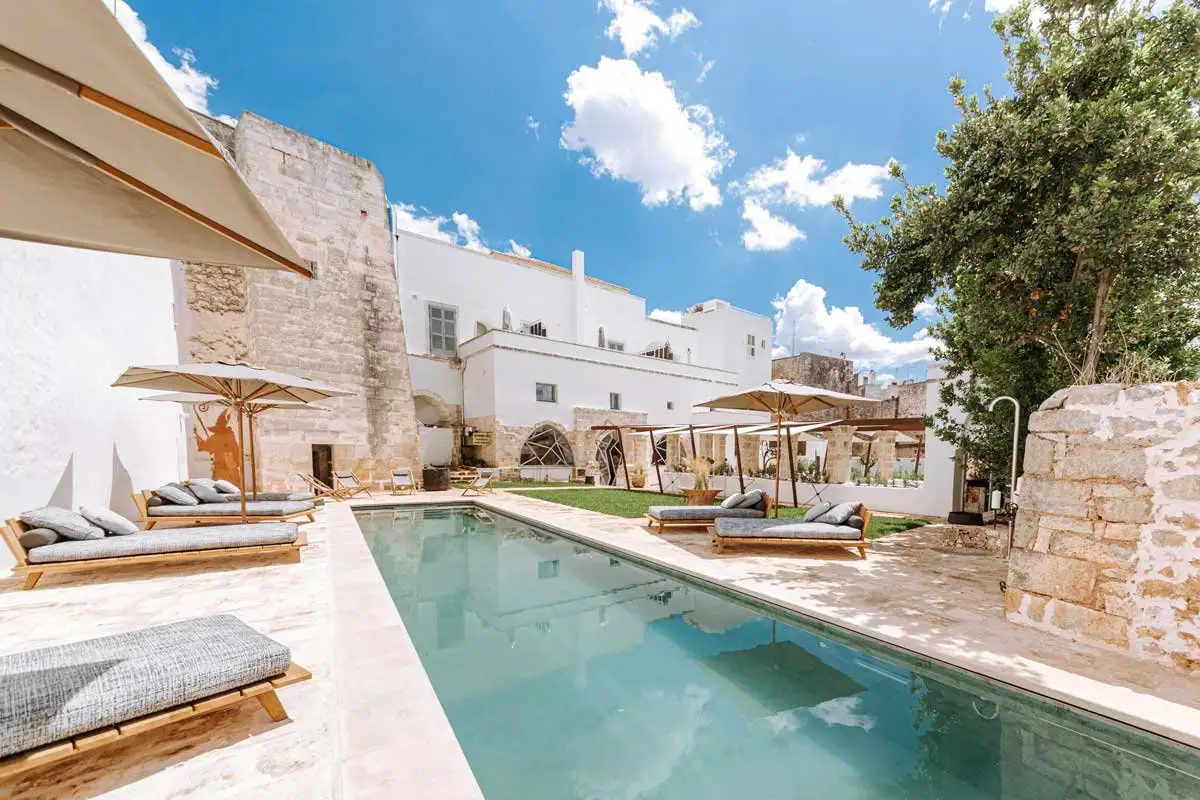
Paragon 700 in Ostuni is exactly the kind of place that rewards a slow stay. Puglia, known as the vegetable garden of Italy, is all about slow and intentional living, and adult-only Paragon 700 encourages exactly that. It’s the only red palace in Ostuni and the only hotel in town with a pool.
Why This Is the Antidote to Overtourism
For luxury travellers, overtourism presents a host of challenges. Crowds dilute the sense of exclusivity, queues and congestion rob landmarks of their magic, and some destinations can feel like stage sets rather than authentic encounters. OutThere
Slow travel is one of the more intelligent responses to this. If you are spending a week in one place, you are far more likely to wander off the main square, eat where the locals eat, and find the parts of a destination that have not yet been replicated on a thousand Instagram feeds. Speed pushes you towards the obvious. Slowness lets you find the real thing.
The other benefit is the one you feel in your body. In 2026, the frontier of advanced wellness has moved far beyond spas and retreats. It is now integral to how consumers choose and value travel itself. A slow trip is, almost by definition, a restorative one. You’re not running for trains or managing logistics or triangulating between three different sets of accommodation. You’re simply somewhere, for long enough to actually be there and have a experience.
That is the point of travel. It always was.