

200 Hr Hatha YTTC at Sampoorna Yoga, Goa
26 February 2026 · Written by Lulu Townsend · Travel & Lifestyle

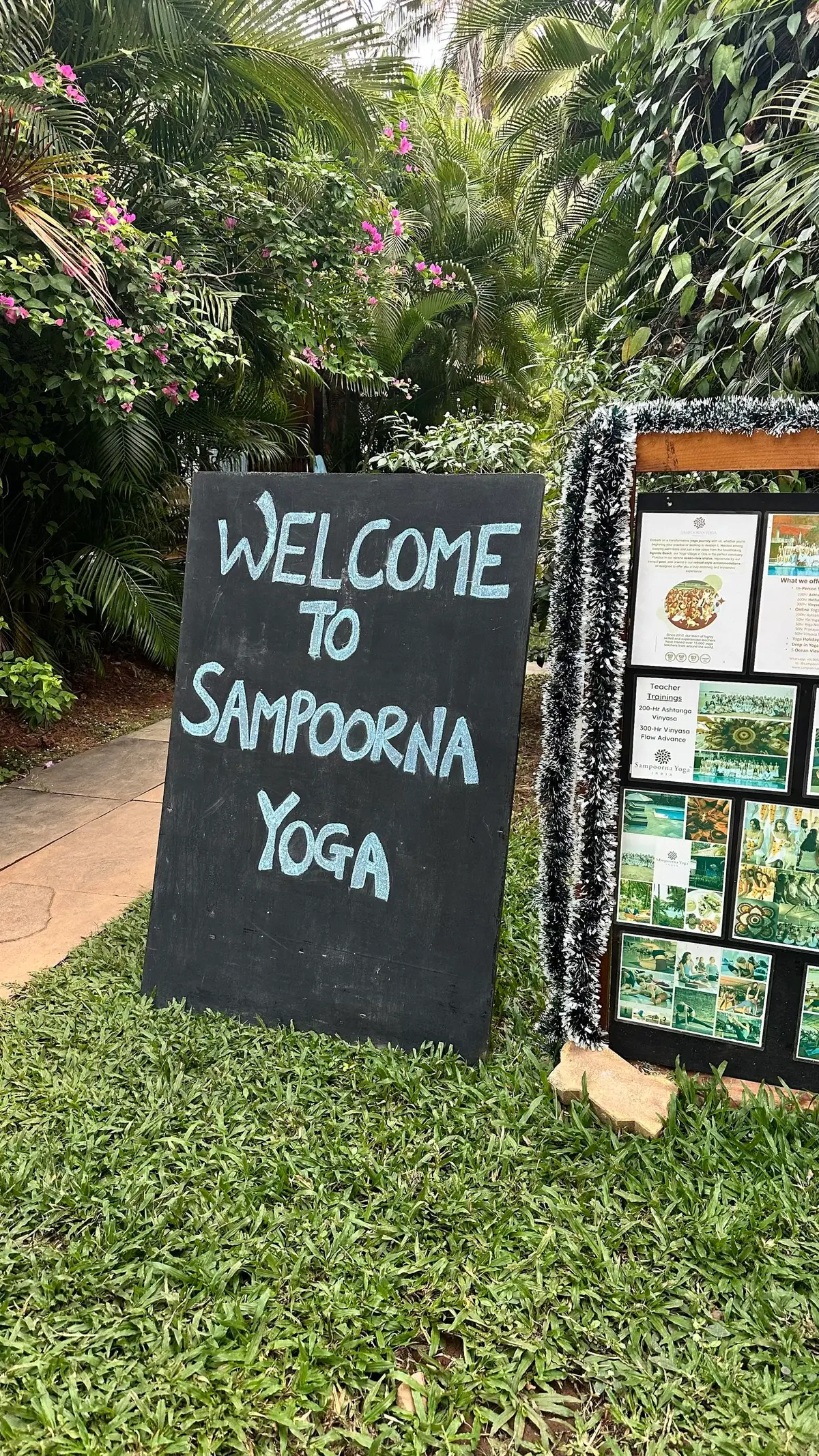
My 2026 started in Goa at Sampoorna Yoga.
A three-week Hatha Yoga Teacher Training course just moments from the beach. Deepak Sharma, founder and director of Sampoorna Yoga, established the school in Goa in 2008. His journey spans more than three decades of practice and 15 years of teaching. It’s shaped by lived experience as much as formal study. His path shifted in his twenties after an intense encounter with the Bhagavad Gita, followed by years spent studying spiritual texts, visiting ashrams and attending satsangs alongside a conventional working life. He later studied under respected teachers, including Swami Sivananda, Swami Satyananda, Swami Niranjanananda, Osho and Goenka ji of the Vipassana tradition. His teaching is practical, philosophical and steady. He has brought together a fantastic team of Indian and Western teachers, each with many years of experience teaching internationally.
The 200-hour Hatha Yoga Teacher Training Course at Sampoorna Yoga, Goa is a serious and intense three-week immersion into yoga as a complete system. It’s intensive, structured and quietly demanding in the best possible way. This is not a course you drift through. You’re expected to show up, be on time, pay attention and engage fully with the practice, the philosophy and yourself. Self-study and homework are expected each day.
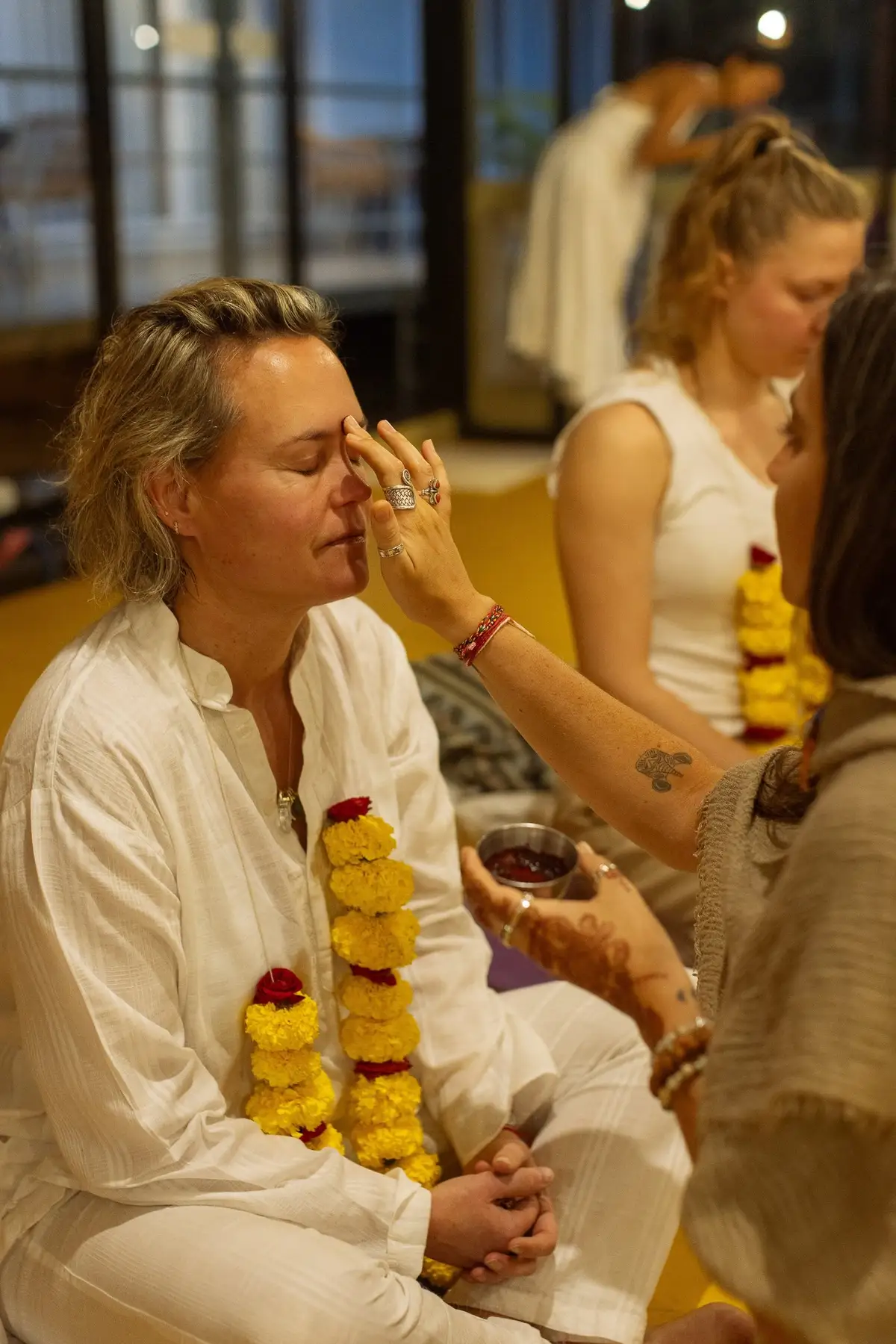
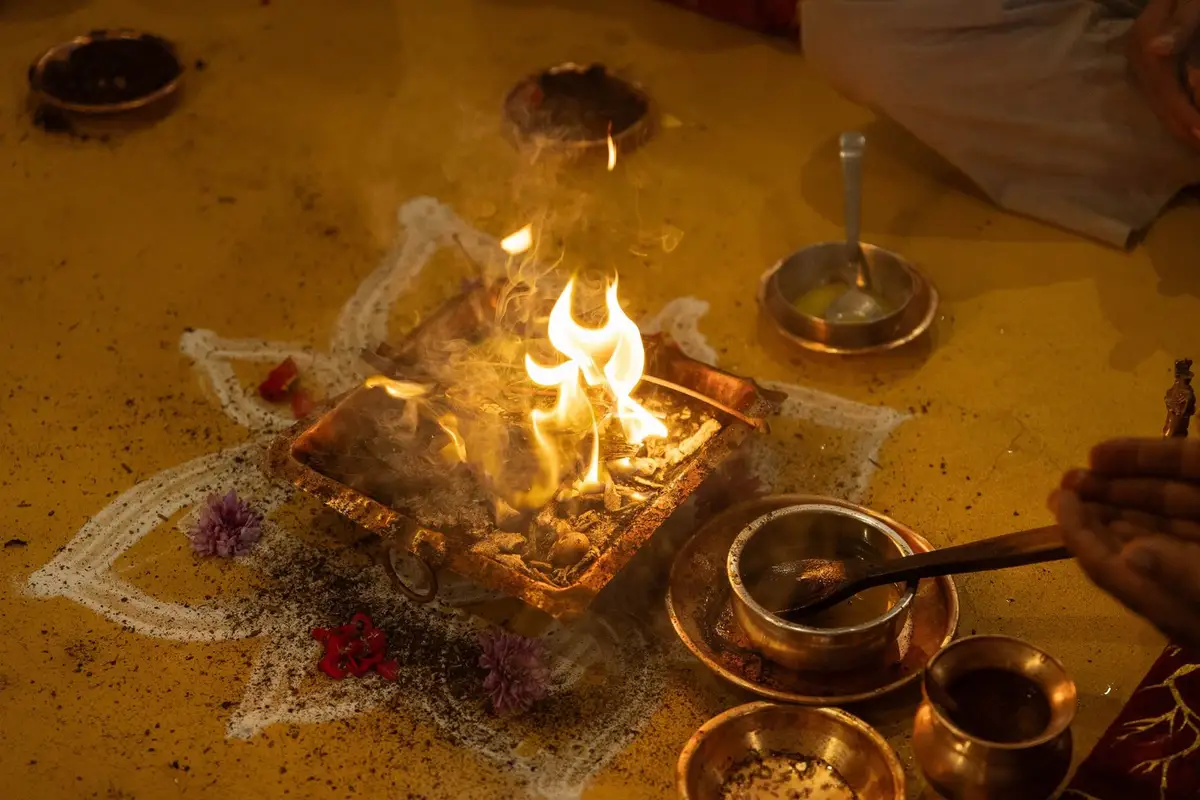
For those embarking on a transformative Yoga Teacher Training (TTC) at Sampoorna Yoga, the experience begins far before the first Asana. The journey is traditionally inaugurated with the Opening Fire Ceremony, an ancient Vedic ritual known as a Havan or Yagya.
This isn't merely a formal introduction; it is a profound sensory experience designed to bridge the gap between the chaotic outside world and the serene, dedicated space of the yoga shala.
The Essence of the Ritual
The ceremony serves as the spiritual cornerstone of the training, acting as a collective beginning. As 200-hour and 300-hour students gather for the first time, individual energies are woven into a unified community. It’s a moment of shared purpose, setting the tone for weeks of deep introspection and growth.
The Symbolism of Agni
In Vedic tradition, Agni (the fire) is the divine messenger. The ceremony carries layers of deep, symbolic meaning for the modern practitioner:
-
Spiritual Purification: The flame is a powerful cleanser. It’s believed to "burn away" the mental clutter, limiting beliefs, and emotional baggage that we often carry into new chapters.
-
The Power of Sankalpa: At the heart of the ceremony is the setting of a Sankalpa, a heartfelt intention. By placing offerings into the fire, you are metaphorically planting the seeds of your goals into the universe.
-
Invocation of Clarity: Through shared prayer, the group invokes wisdom and the strength to pursue "right action" throughout their educational and spiritual path.
The Ceremony Experience
The ritual is a beautiful tapestry of sound, scent, and tradition. While each ceremony is unique, the experience at Sampoorna typically features:
Sanskrit Mantras: Chanting sacred vibrations by the priest to elevate the energy of the room. Sacred Offerings: Placing Ahuti (ghee, grains, and herbs) into the fire to symbolise the release of the ego. Collective Stillness A grounding moment of prayer to invite growth and remove any obstacles to learning.
A Grounding Start to an Intense Path
While the Sampoorna curriculum is famously rigorous and "jam-packed," this opening ceremony provides a vital moment of grounded stillness. It allows students to fully "arrive" in their bodies and minds, ensuring they begin their professional yoga journey from a place of clarity, grace, and elevated intention.
Accommodation is simple, spacious and thoughtfully arranged. Rooms can be single or shared and feel calm and uncluttered, giving you space to rest properly between long days of study and practice. There is a pool for downtime and a sense of ease around the ‘campus’ that makes it easy to settle into the rhythm of the course. Communal dining is vegan and shared, with generous, well-cooked meals that include Goan specialities. Coffee lovers needn’t worry. The juice and coffee bar serves every type of coffee you might want, which feels quietly essential during an intensive training alongside excellent smoothies and juices for only around £1.50 each, the perfect way to start your yoga journey.
The days at Sampoorna are full, and this isn’t a course for the light-hearted, starting at 6.30 in the morning, finishing at 6pm with Satsang (a gathering where people come together to sit in the company of truth. The word comes from Sanskrit. Sat means truth. Sangha, meaning association or company. Traditionally, satsang involves listening to spiritual teachings, reading sacred texts, chanting, meditating, or engaging in quiet reflection, often guided by a teacher. It’s less about instruction and more about presence. Time spent listening, questioning and contemplating without distraction. In yoga traditions, satsang offers a pause from daily activity and a chance to orient the mind towards clarity, self-enquiry and inner discipline twice per week. You cover all areas of Hatha yoga, from asana and alignment to philosophy, pranayama, meditation, kriyas, bandhas and anatomy. Mornings began with traditional Hatha Yoga practice with Nandini at 6.30 in one of the yoga shalas. Days are split between physical work, theory, and teaching methodology. Evenings often return you to stillness through meditation, chanting or Yoga Nidra. Saturdays open up with partner yoga (which won’t be to everyone’s taste) free time in the afternoon and Sundays are free, giving time to rest, reflect or head across the road to the beach. Being so close to the sea matters. It gives the course breathing room and lets you absorb the quieter, spiritual side of the training without feeling confined.

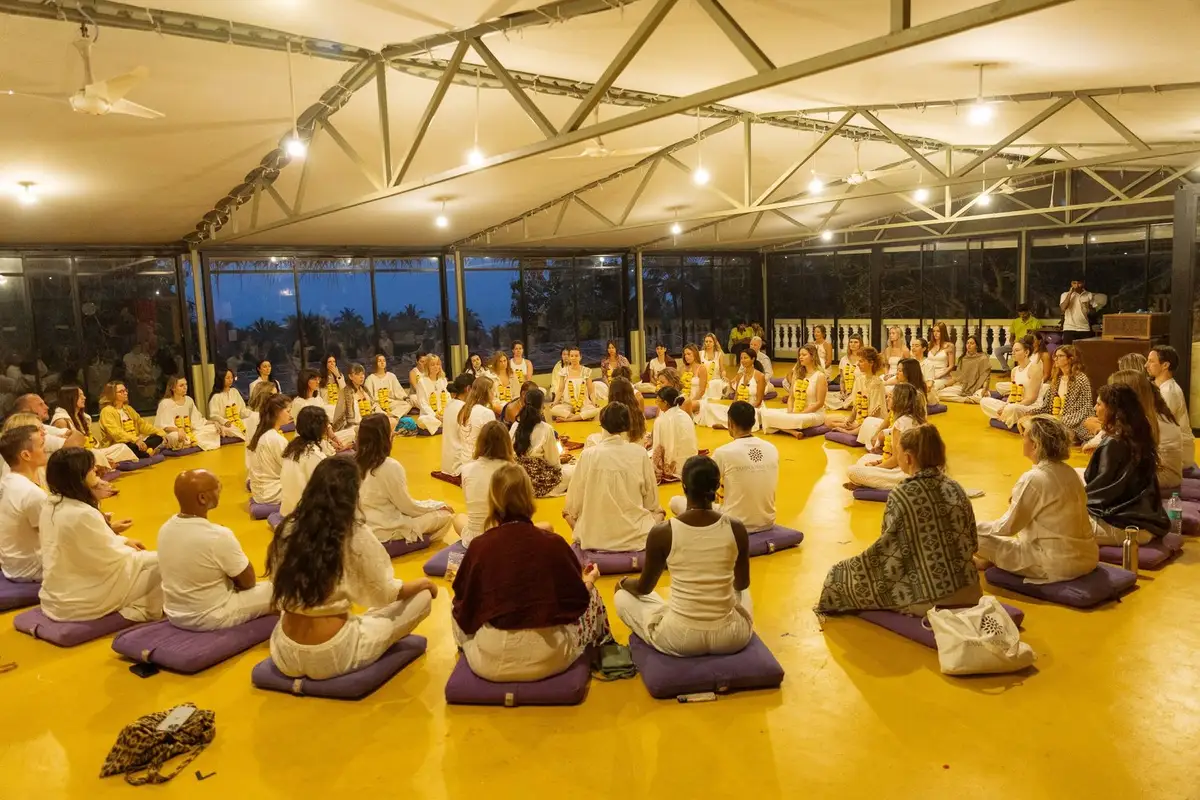
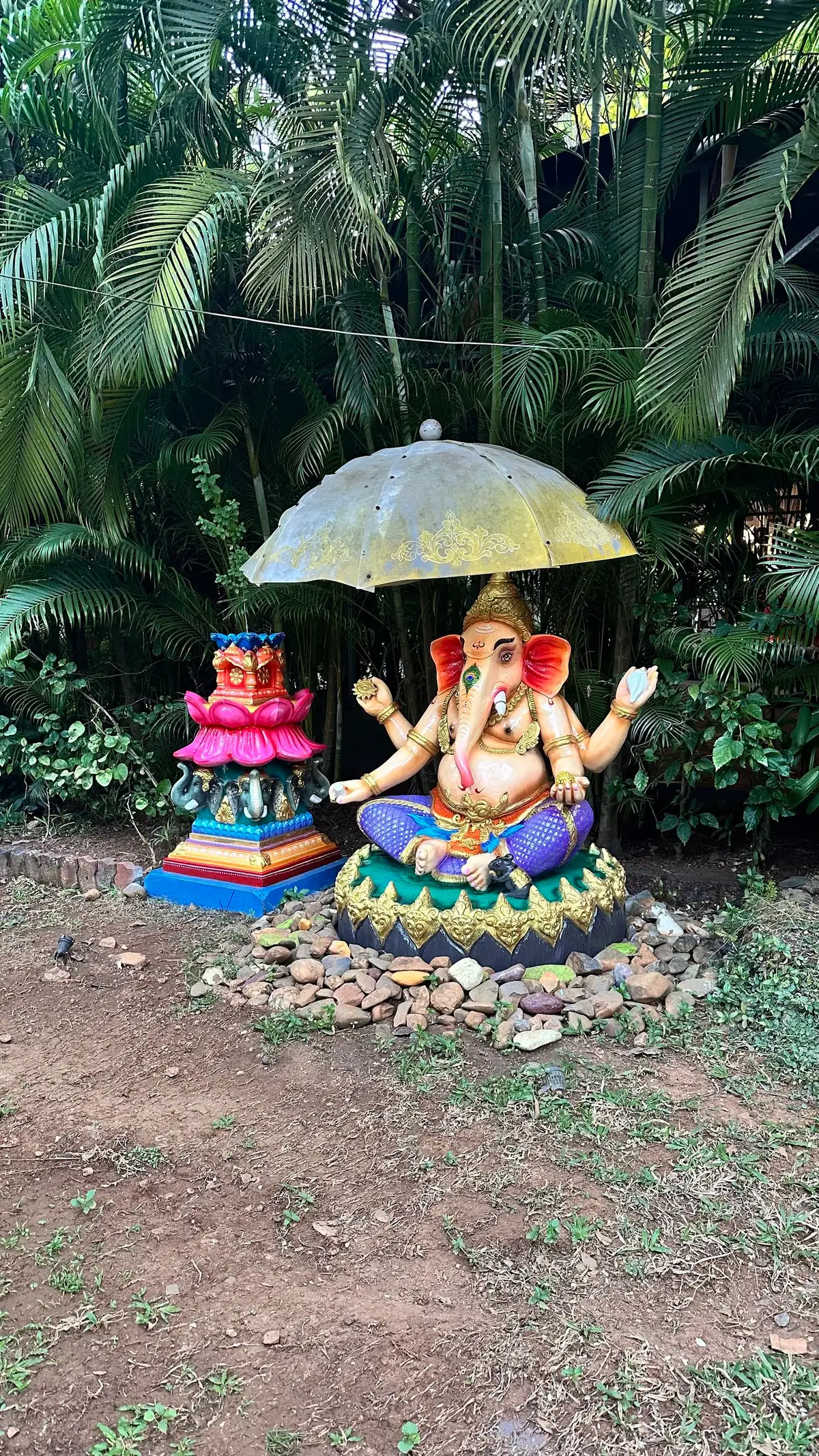
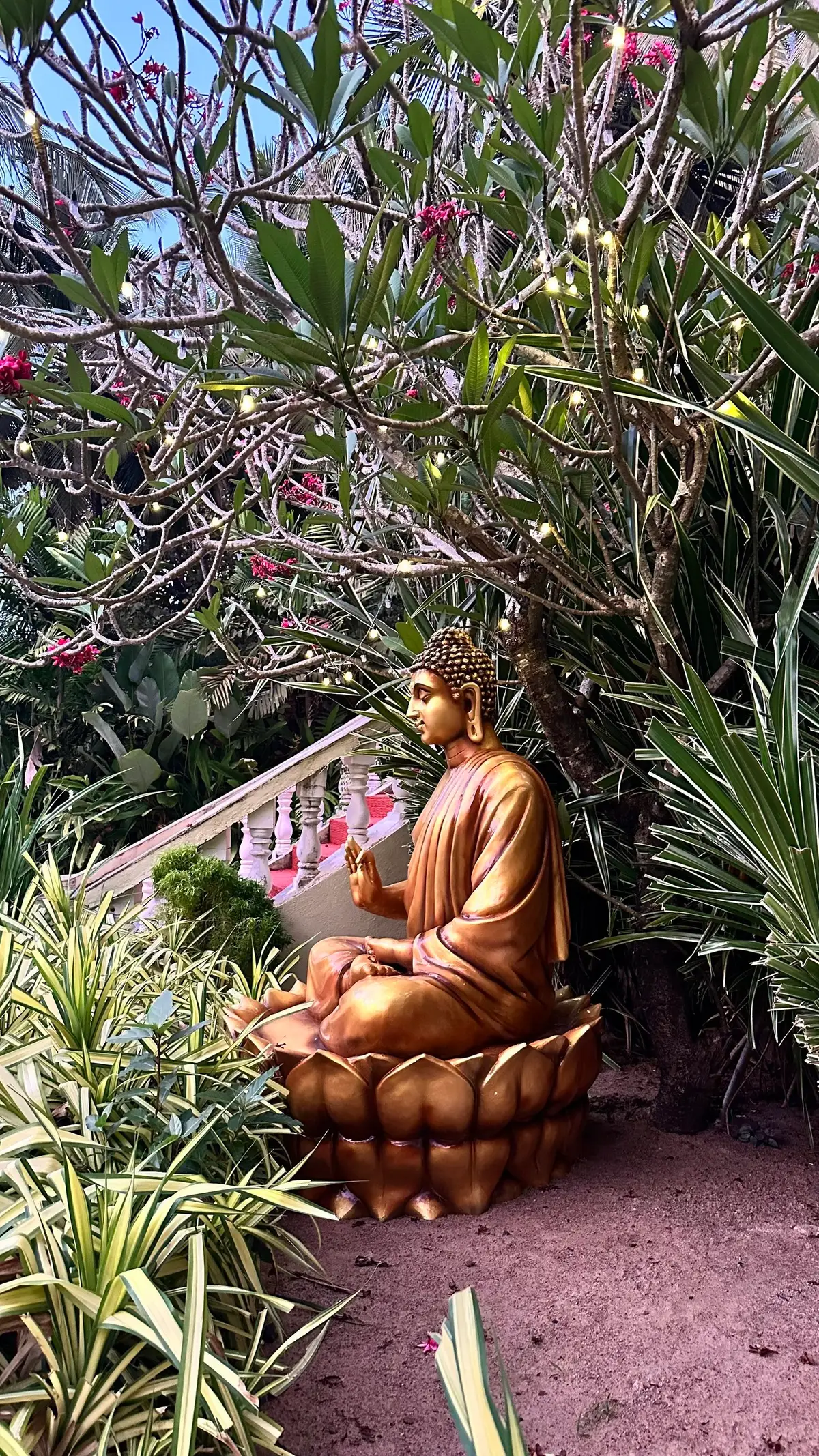
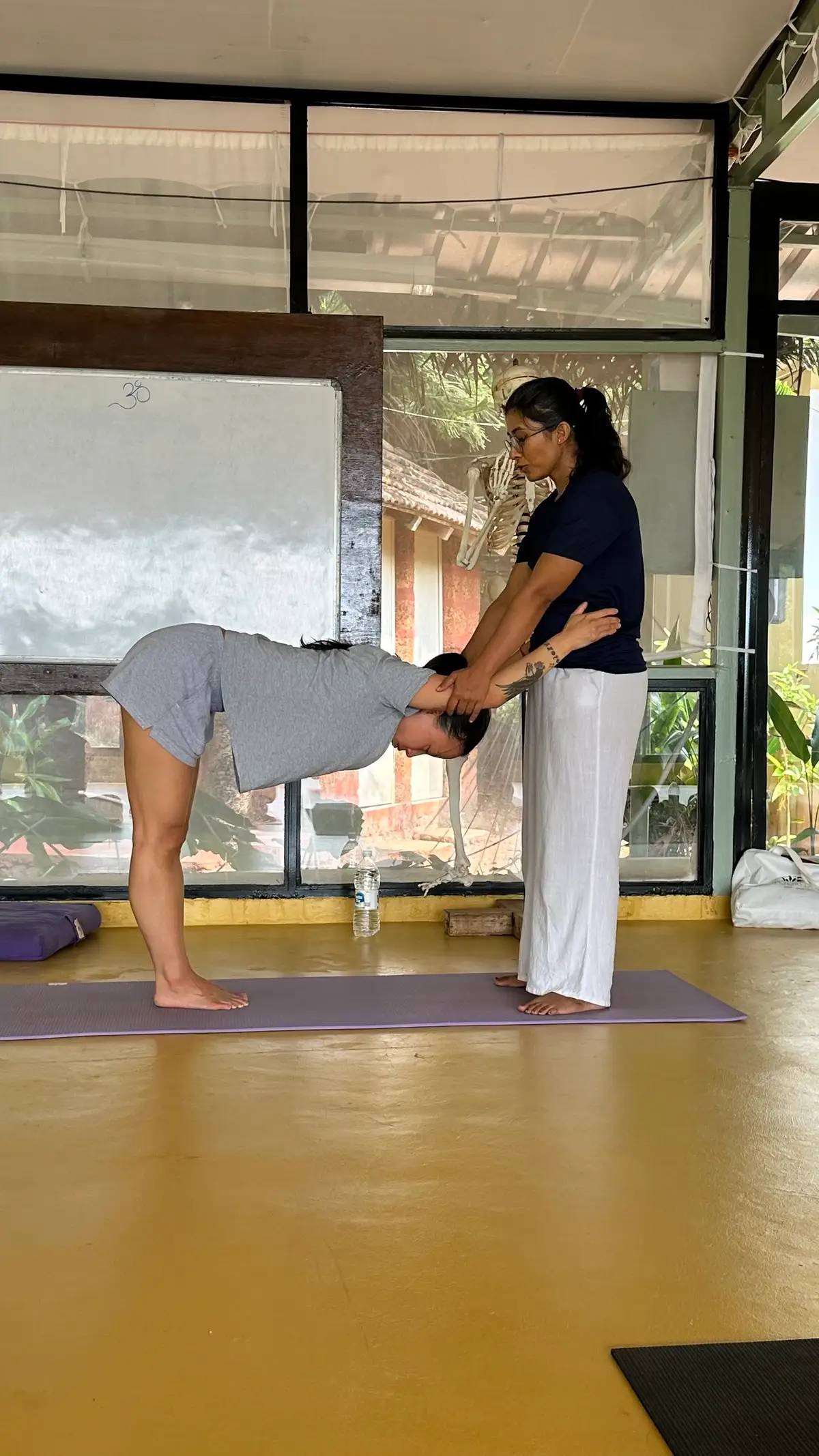
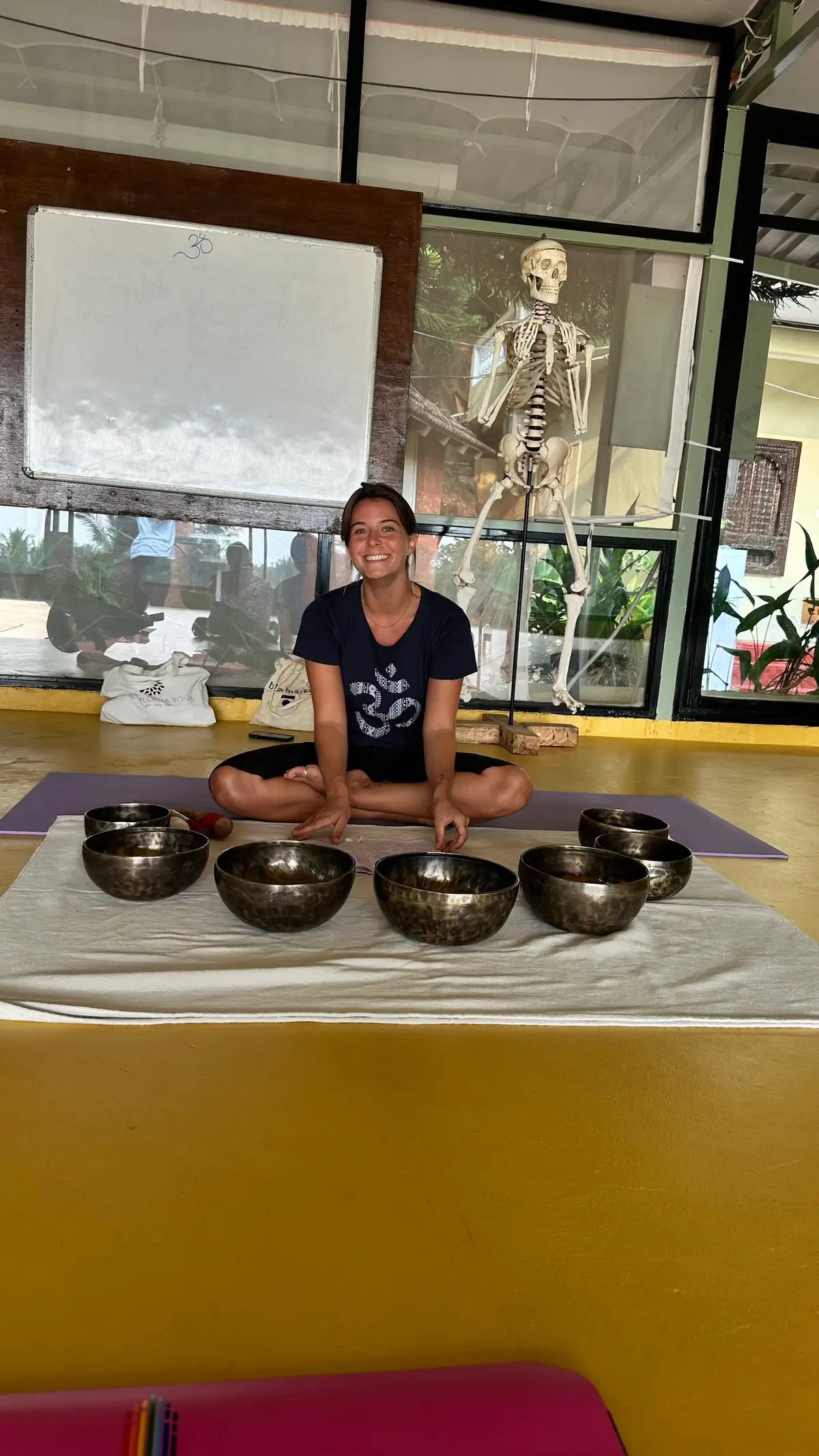
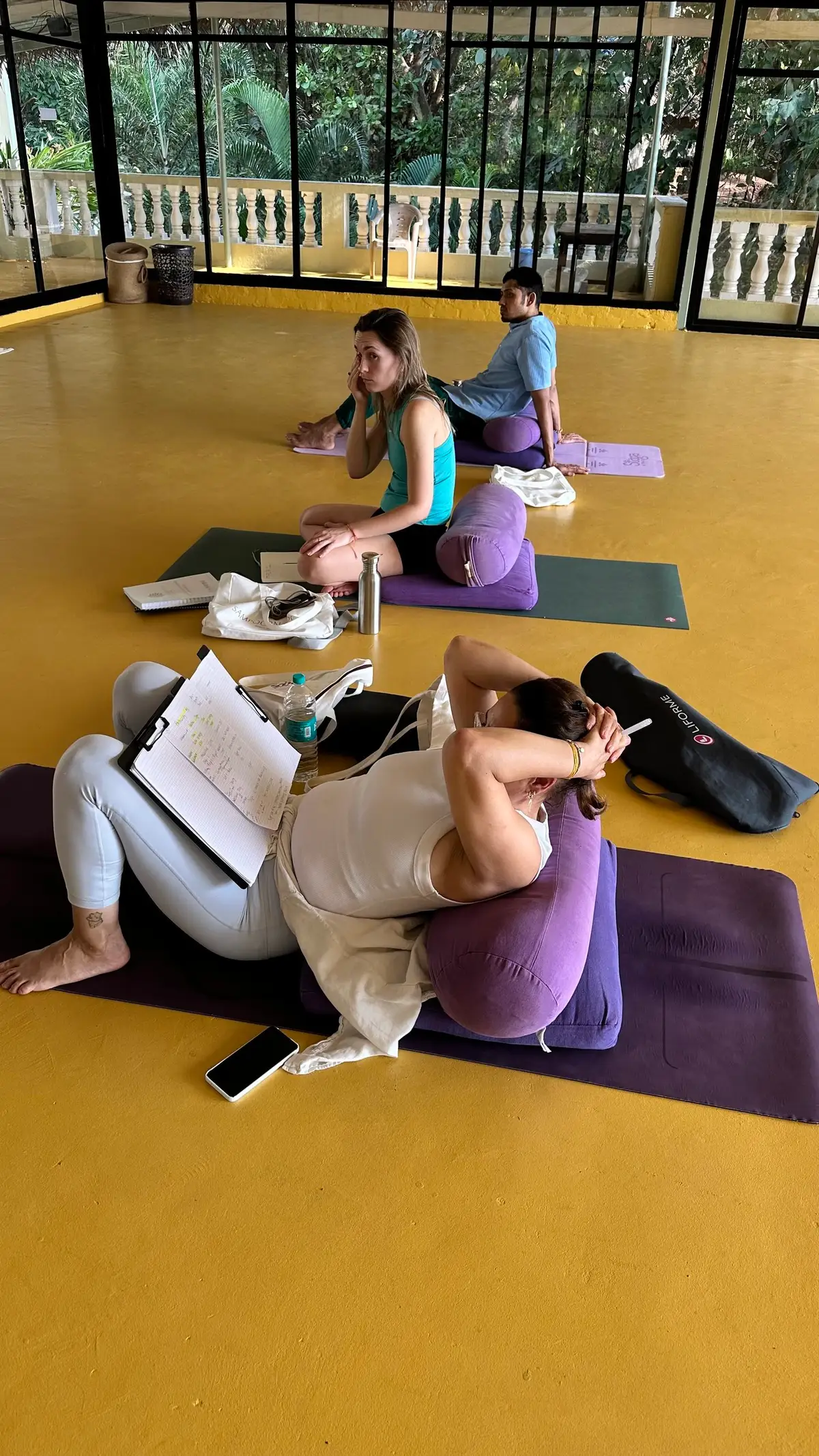
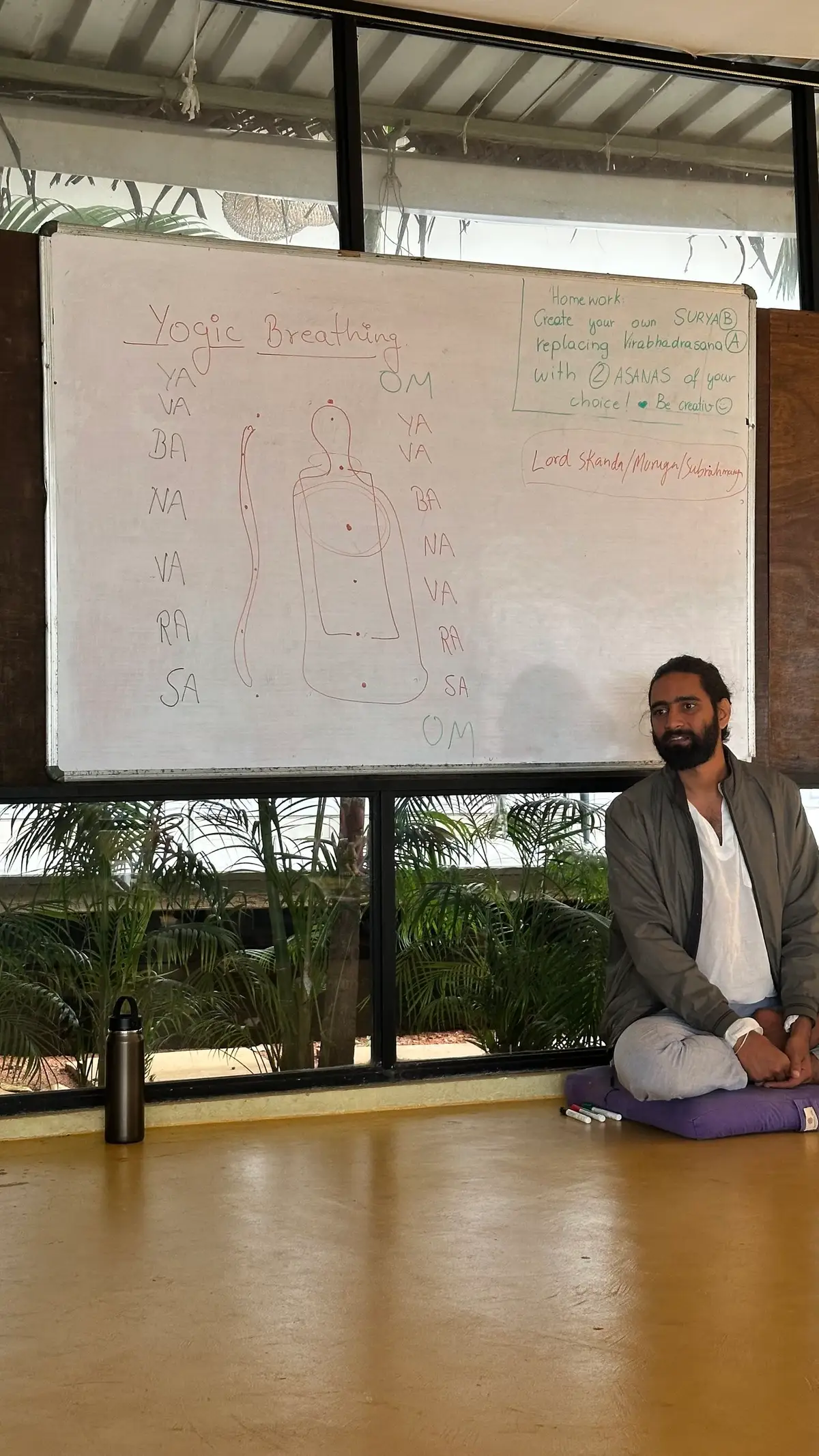
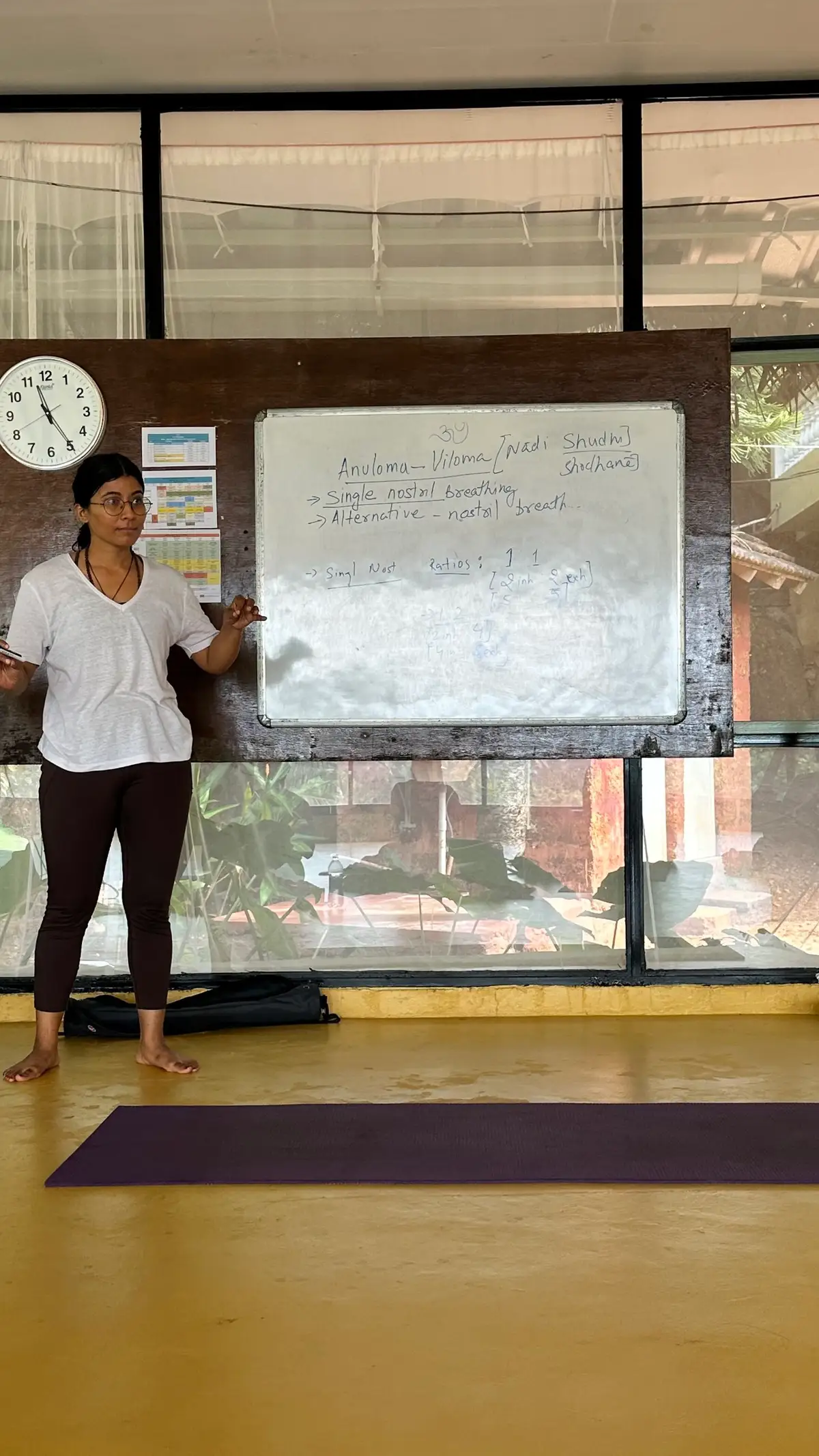
What stands out is the sense of community, smiles and positive energy. Teacher Chris, whom I didn’t have but who is part of the teaching team, radiates light and positivity and has a constant smile on her face. Different teacher training groups run alongside each other, including Vinyasa and Ashtanga courses, yet everything feels cohesive rather than fragmented. Shared meals, shared spaces and shared practice bring people together naturally. There’s a conversation. There’s a knowing exchange. There’s time to sit and listen.
The Hatha course itself is rooted in the Sivananda lineage and taught with care, respect, humour and clarity by all of the teachers involved. This is a slower, more deliberate approach to yoga, where alignment, breath and awareness take precedence over pace and flow (there is no flow in Hatha yoga). The focus is firmly on depth and alignment rather than performance. You study why postures exist, how they affect the body and nervous system and how they support meditation and daily life in the mind, body and spirit. Teaching methodology is woven in steadily, from sequencing, postures and alignment to class structure and clear cueing, use of props and adapting practices for different bodies.
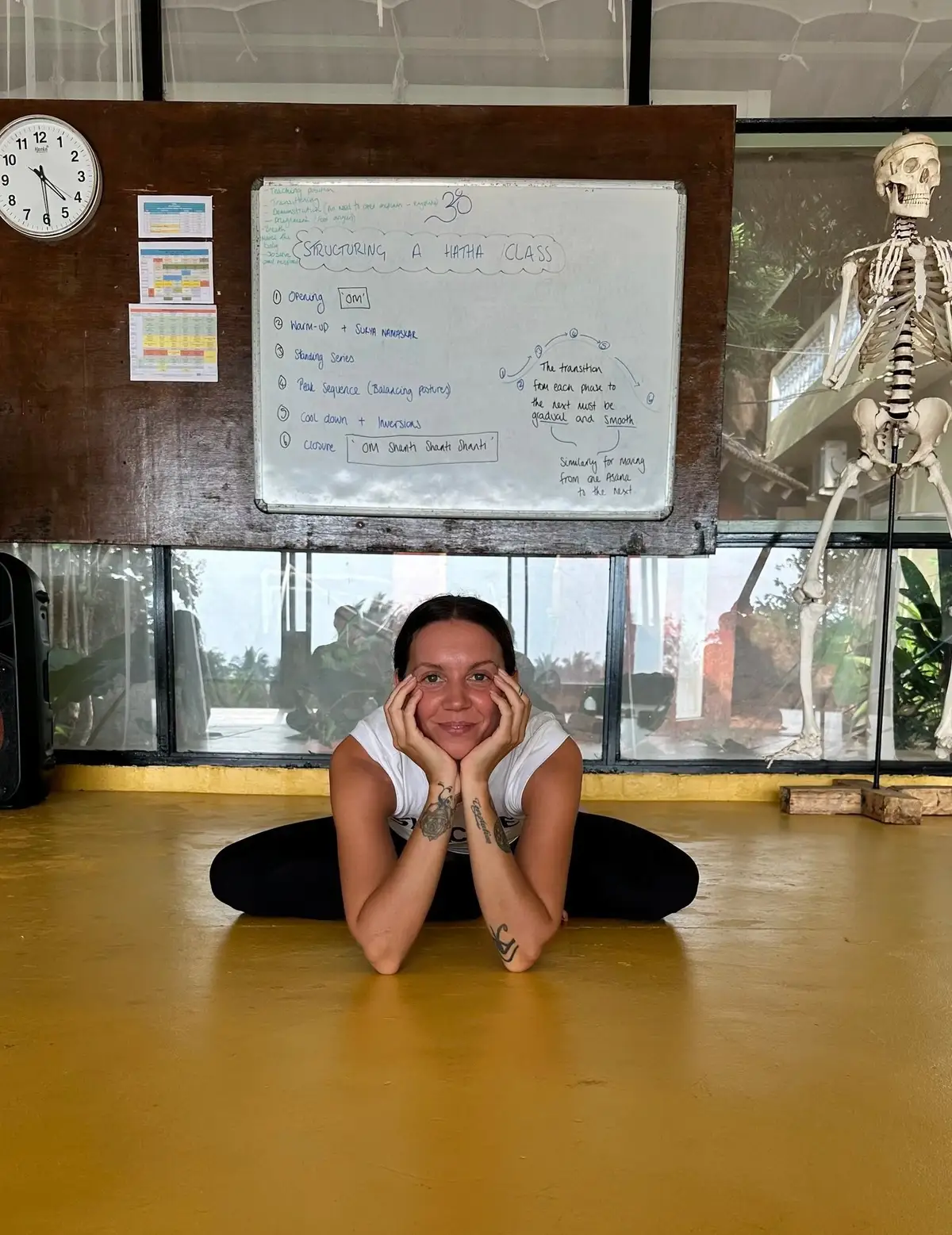
Chelsea Harper, Modern Hatha Yoga Teacher
Philosophy is given proper weight at Sampoorna. You explore the Five Points of Yoga, the Four Paths of Yoga, the Three Gunas, the koshas, prana, chakras and nadis, as well as broader questions around discipline, devotion and the inner life of a practitioner. Meditation is treated as central rather than optional, with theory and daily practice supporting a deeper understanding of concentration, mantra and stillness. Pranayama, kriyas and bandhas are taught carefully, with emphasis on safety, clarity and integration rather than ambition.
Anatomy and physiology are covered in a practical, functional way. You learn how postures affect the body's systems, how to recognise limitations, and how to teach with intelligence rather than assumption (we’re taught to never assume anything). The emphasis sits on understanding rather than memorising.
This course suits people who want to understand Hatha yoga properly - its history, its philosophy and its practice. It works well for beginners who are willing to work and for experienced practitioners who want to step away from fast-paced Western styles and return to foundations. It’s not for those chasing constant movement or aesthetic flow, ego and performance. It’s for those interested in history, philosophy, the history of yoga, discipline, and learning to teach with steadiness and integrity. We’re reminded to respect traditions and never be late as practitioners. We had a mixture of Indian and Western teachers - strict Charlotte taught us contemporary Hatha yoga, Nandini traditional, and our KY Charlotte gave us several yoga sessions. All three were exceptional, bringing something different to our learning experience.
It’s a rare thing, being with 8 other people all day for three weeks, friendships and bonds form, understanding develops, judgements drop by the wayside and a tight-knit community forms. It was a privilege to spend that time with my fellow yogis: Gaurav, Angel, Liam, Arina, Julia, Doritt, Maria, and Ella, from seven different countries, all with different experience levels and types of yoga.
Our last day with Nandini was a gruelling 108 Sun Salutations, during which she encouraged us to work up a sweat and watch our hard work ‘drip onto the mat’. Practical and theoretical exams followed.
The Grand Finale: The Closing Fire Ceremony
To bring the journey full circle, the experience concludes with a final, celebratory Closing Fire Ceremony after which certificates are handed out. If the opening was about planting seeds, the closing is about the harvest. This ritual serves as a poignant "seal" on the weeks of transformation, during which students gather one last time to offer their gratitude to the fire before the priest. It’s a deeply emotional transition, moving from student to certified teacher. As the final mantras are chanted, the ceremony honours the collective growth of the group, symbolising the internal fire of knowledge that each graduate will now carry back into the world. It’s the ultimate moment of celebration, reflection, and sacred transition, ensuring that the bond formed within the shala remains an enduring part of your lifestyle.
A defining moment in both the opening and closing ceremonies is the tying of the Mauli (or Kalava), the sacred red cotton thread, around the wrist. This elegant, minimalist symbol serves as a powerful "spiritual anchor" throughout your time at Sampoorna.
-
During the Opening: The thread is tied to signify the binding of your intention. It acts as a constant, tactile reminder of the Sankalpa you whispered into the flames. In Vedic tradition, it’s also a seal of protection, shielding your energy as you undergo the intense emotional and physical shifts of the training.
-
The Symbolic Connection: Wearing the thread creates a silent, visible bond between you and your fellow practitioners. It’s a mark of belonging to a lineage of wisdom that stretches back thousands of years.
-
During the Closing: As you transition into your new role as a teacher, the thread represents the unbroken cycle of knowledge. It serves as a souvenir of the grit, grace, and growth experienced within the shala, a small but vibrant reminder of the "inner fire" you are now taking home to your own community.
As I stood in the soft glow of the final fire ceremony, the sense of achievement was nothing short of overwhelming. Looking back, the three-week journey was far from easy; navigating a rigorous daily schedule with arthritic knees and an immobile ankle made every walk up the steep hill to the shala and asana a mountain to climb. There were certainly mornings when the luxury of staying in bed felt far more appealing than the mat, but the Sampoorna wisdom stayed with me: the true magic lies simply in showing up. I took that to heart, making it my personal mission to be the first one in the shala, settled and ready, every single day without fail. Standing there as a graduate, I realised that the physical challenges didn’t define my experience; my discipline did. I left India not just 4kg lighter and with a certificate, but with the profound, quiet pride that comes from pushing past your perceived limits, out of your comfort zone and proving that, with enough grace and grit, anything is possible.