

From Cape Town to Ostuni: The Founders Behind Paragon 700
28 May 2026 · Written by Lulu Townsend · Fabulous Female Founders
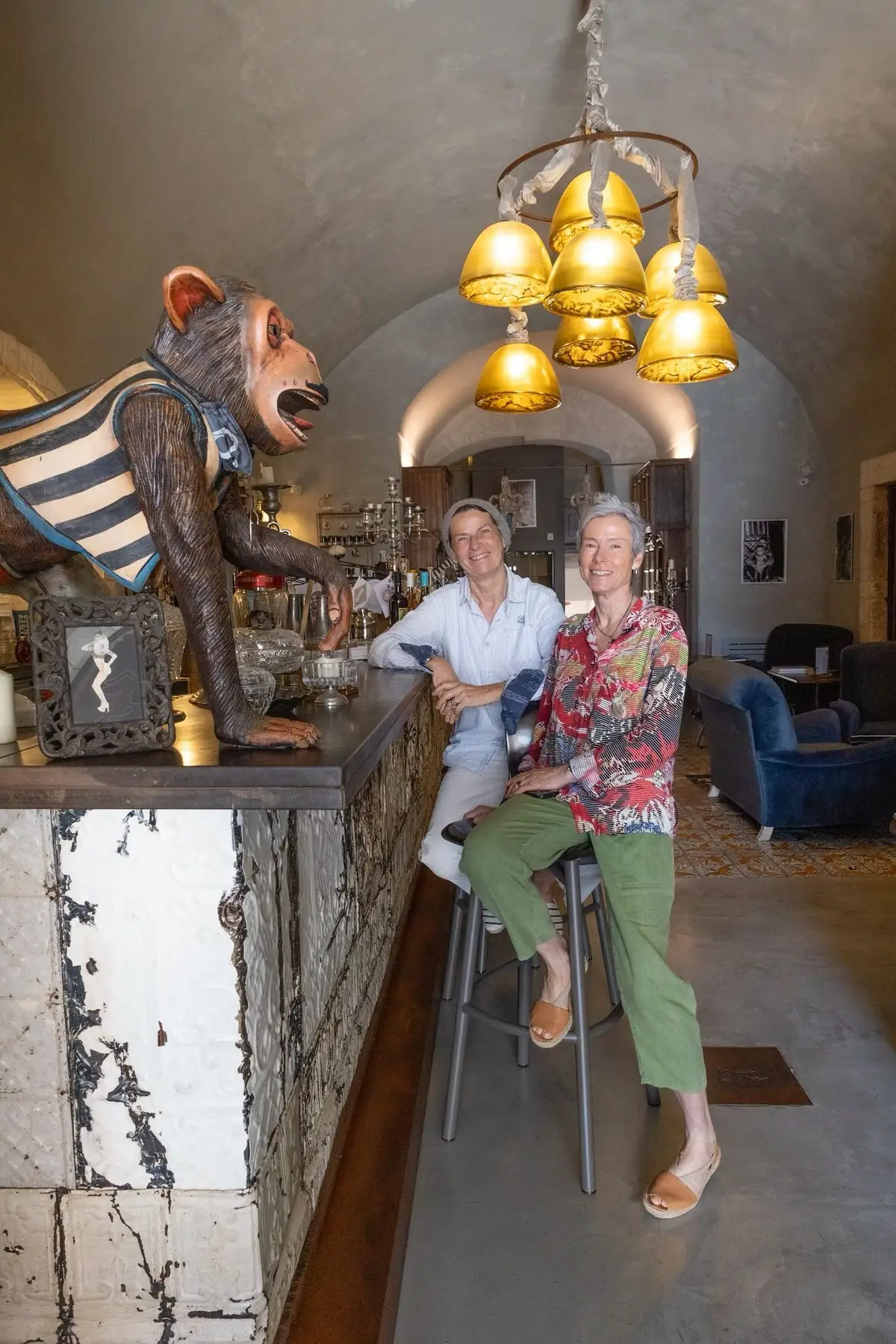
Ulrike Bauschke and Pascale Lauber on three decades in hospitality, the morning they walked into Palazzo Rosso, and the South African fire bowl that became a bathtub.
The hotel began with a wrong turn. Ulrike Bauschke and Pascale Lauber were not looking for another project in 2016. They had opened restaurants in Lausanne, Paris and New York, run a boutique guest house in Cape Town for a decade, restored a Puglian masseria and remade the P Beach club at Specchiolla. They wandered into Palazzo Rosso to look at the architecture. They left as its owners.
Ulrike, born in Frankfurt and fluent in four languages, trained as a travel agent in Munich.
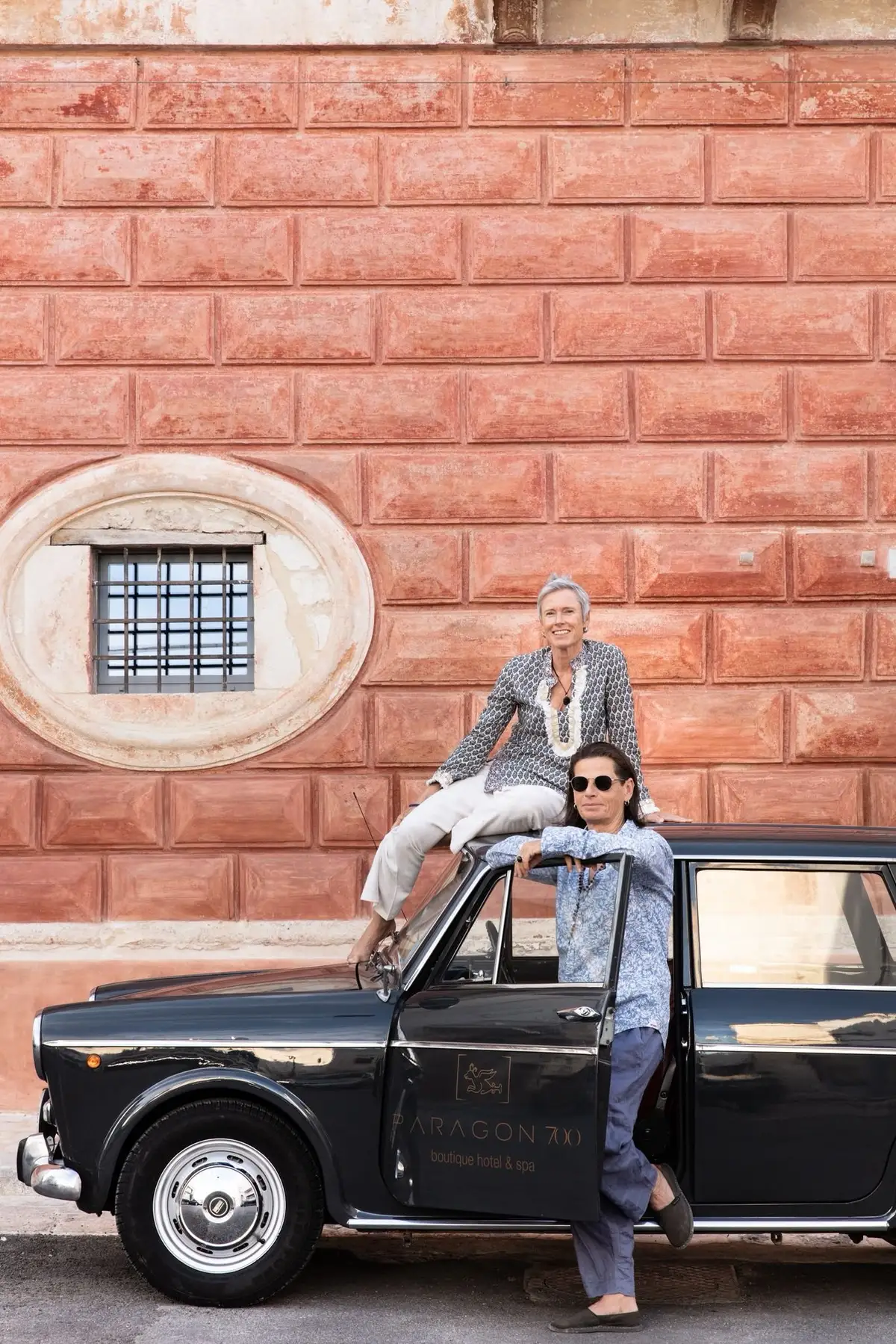
Pascale and Ulrike outside Paragon 700
Her early career carried her through the airline LTU and then Air France in Paris before Switzerland brought her to a hotel in Lausanne, and to Pascale, whose father owned a restaurant the pair would soon take on together. What followed was years of restaurants, hotels and apartments across Europe and the United States. The Cape Town guest house lasted ten years and is still, in their telling, one of the projects they loved most.
Pascale, born in Lausanne, says architecture and design are in her blood. Through her studio ID Living she has worked on properties across Europe and Africa, never to a fixed template. The ideas come on site. Old buildings draw her in. So does travel, which is why a guest at Paragon 700 might find a chandelier from Thailand hanging above the staircase, a sofa custom made in South Africa, an Indian brazier reborn as a bathtub. In one of the deluxe rooms, a South African boma, a traditional fire bowl, has been turned into a tub.
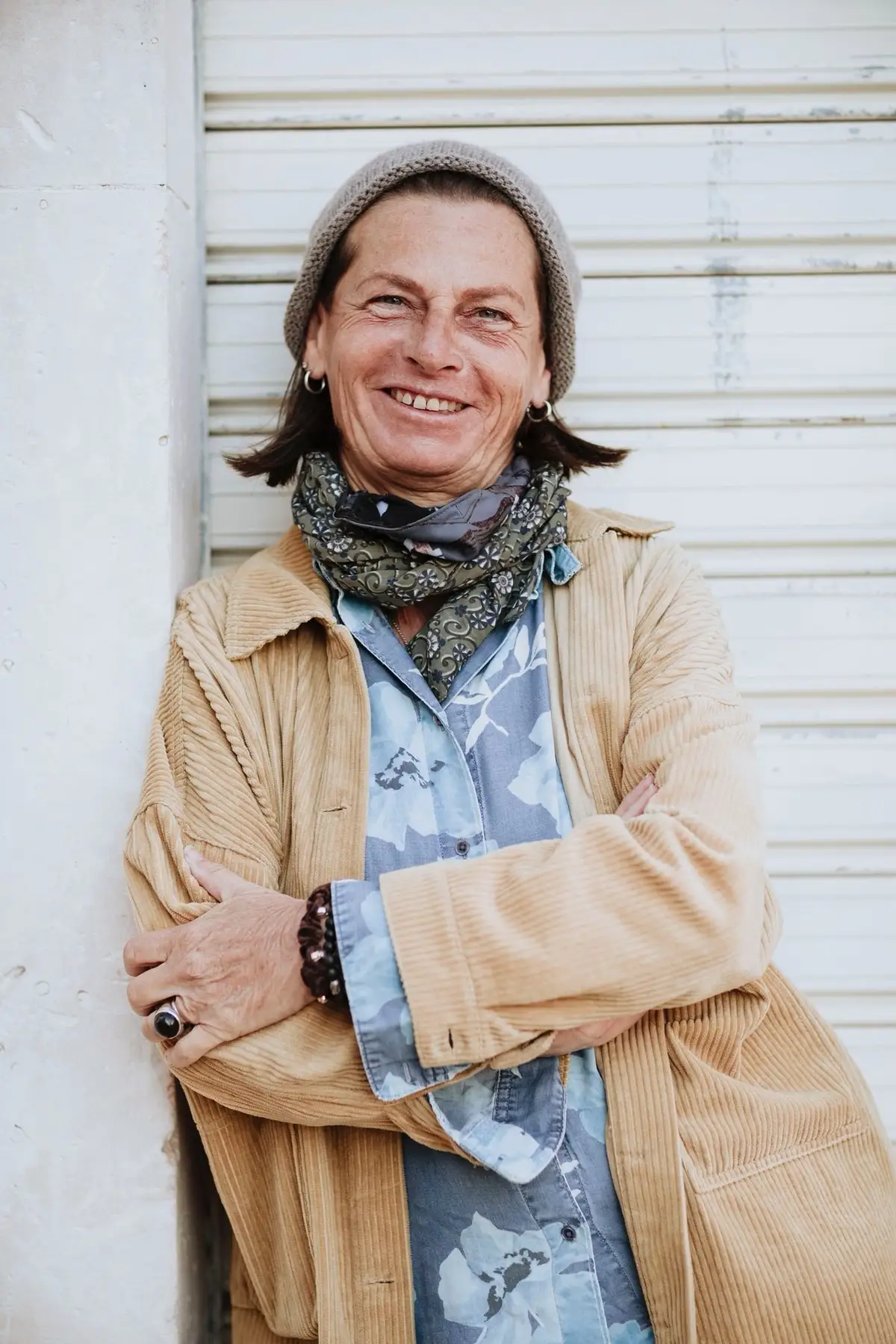
Pascale Lauber
Palazzo Rosso, the building they walked into that morning, takes its name from the deep red stone that gives Ostuni its character. Vaulted ceilings. Frescoes. A scale you do not build any more. Ulrike calls it love at first sight, with the slight embarrassment of someone admitting a habit. Pascale worked alongside preservationists. Furniture was commissioned. Old craft methods were brought back where the building called for them. Contemporary pieces were chosen to sit beside, not over, the original fabric.
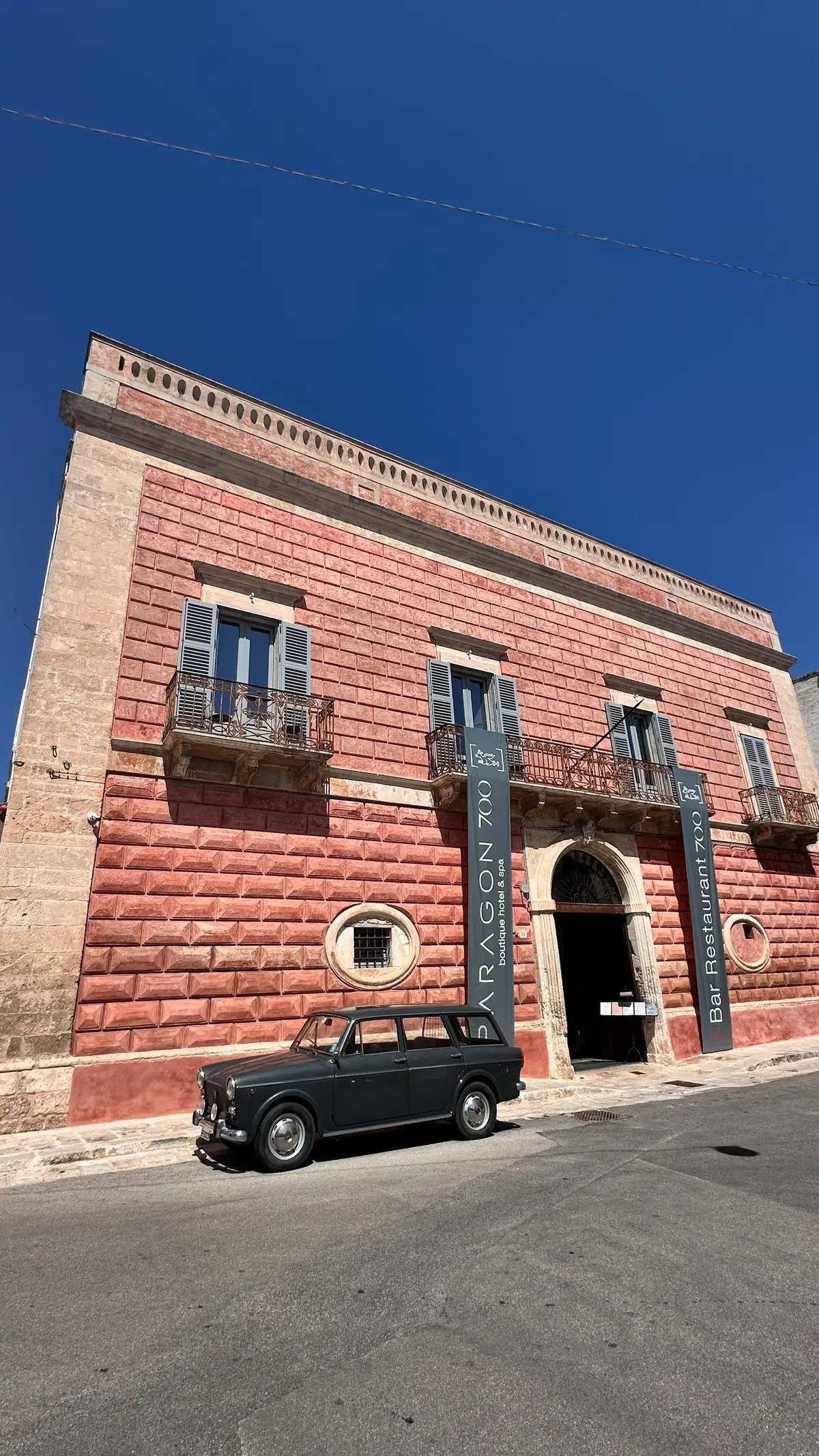
Paragon 700, Ostuni
“It was too beautiful to stay hidden,” Ulrike says of their first walk through the rooms.
Pascale describes her approach more bluntly. “I don’t follow a concept. I follow the building.”
Paragon 700 sits in the historic centre of Ostuni and is now the centrepiece of their working lives, though they still divide their time between Switzerland and Italy. The next project, by their own account, is rarely planned. It usually walks up to them.
ABOUT PARAGON 700
Paragon 700 is a boutique hotel housed in a restored historic palazzo in the centre of Ostuni, Puglia. The property comprises deluxe rooms and suites, a restaurant, a private garden, and interiors sourced and commissioned across the founders’ working lives in Europe, Africa and Asia. paragon700.com